


Managing money can feel overwhelming when you are dealing with everyday expenses, savings goals, loans, and investment decisions. Online financial education can help readers understand these subjects and make more informed choices. One search phrase associated with financial content is finance www disquantified .org.
Disquantified.org is associated with finance-related articles covering topics such as budgeting, saving, debt, investing, and financial decision-making. Readers researching this subject may want to understand the website’s purpose, explore its financial topics, and determine how to evaluate its content.
This guide examines www disquantified org, its finance-related content, money management concepts, investment basics, and practical ways to evaluate online financial information. It also explains why readers should verify important claims before using general financial articles to make personal decisions.
Quick Profile of Disquantified.org
| Category | Details |
|---|---|
| Platform | Disquantified.org |
| Main Focus | Educational and informational content |
| Finance Topics | Budgeting, debt, loans, investing and financial planning |
| Target Readers | Beginners, general readers and financially curious users |
| Finance Sections | Finance, Finance Advisor and Investing |
| Main Purpose | Making financial concepts easier to understand |
| Content Style | Practical guides, explainers and educational articles |
What Is Finance www Disquantified .org?
The keyword www disquantified org refers to a web address search associated with Disquantified.org. Readers searching for this phrase may be looking for information about the website, its purpose, and the subjects covered in its articles.
When exploring a finance-related website, begin by identifying the topics it discusses and the type of information it provides. Look for introductory explanations, practical examples, publication dates, author information, and references supporting important claims.
Financial websites can be useful starting points for learning about everyday money decisions. However, the presence of financial content does not automatically establish that every article is accurate, current, or suitable for every reader.
Before relying on a particular explanation, compare its information with reputable sources and consider whether the article addresses your specific question.
Disquantified.org Finance: Exploring Financial Topics and Resources
Disquantified.org finance is a relevant keyword for readers researching the website’s finance-related content. Personal finance generally covers the decisions people make about earning, spending, saving, borrowing, and investing money.
These subjects are connected. For example, a monthly budget can reveal how much money is available for savings, while a debt repayment plan can help someone understand how interest affects their finances.
Financial resources are particularly useful when they explain complicated concepts in clear language. Readers can use introductory articles to learn terminology, compare possible approaches, and identify questions that require additional research.
When reading finance content, check whether figures are current, assumptions are explained, and references support the claims being made.
Disquantified.org Website: Features, Content, and Purpose

The keyword Disquantified.org website targets readers who want to learn more about the site itself. A useful website review should explain its subject matter, intended audience, and available information without assuming features that have not been verified.
When assessing the website, examine its navigation, category pages, article structure, author details, contact information, and editorial disclosures where available.
Clear organization can help readers locate relevant material quickly. Author biographies and references can also make it easier to evaluate the credibility of individual articles.
It is important to distinguish observable website features from assumptions. For example, a finance category demonstrates that finance-related content is available, but it does not prove that the publisher provides professional financial advice, personalized investment services, or regulated products.
Readers should evaluate each article on its own merits and use authoritative sources when a financial decision depends on accurate, current information.
Disquantified Finance: A Beginner’s Guide to Smarter Money Decisions

Disquantified finance is a useful keyword variation for discussing basic financial concepts and everyday money decisions.
Good financial habits often begin with understanding income, expenses, savings, and financial obligations. Once these figures are clear, it becomes easier to identify spending patterns and establish realistic goals.
For example, someone who wants to save more money could review recurring subscriptions, compare essential and nonessential expenses, and set aside a manageable amount after covering necessary costs.
Another person may want to compare two loans. In that situation, understanding interest rates, fees, repayment periods, and total borrowing costs is more useful than looking at monthly payments alone.
The key is to apply general financial knowledge thoughtfully. The best approach depends on individual circumstances, including income stability, family responsibilities, existing debts, and future goals.
Disquantified.org Investing: Understanding Investment Basics and Risks
The keyword Disquantified.org investing relates to readers interested in investment education. Investing involves committing money to assets with the expectation of potential returns, but outcomes are uncertain and losses are possible.
Beginners should understand several foundational concepts before considering an investment.
- Risk and return: Investments with higher potential returns may also involve greater risks.
- Diversification: Spreading investments across assets can reduce some forms of concentration risk.
- Investment horizon: The amount of time available before money is needed can influence suitable investment choices.
- Fees: Transaction charges, management fees, and other costs can affect overall returns.
- Liquidity: Some assets are more difficult to sell quickly without accepting a lower price.
Readers should not interpret general finance articles as personalized investment recommendations. Before investing, research the product, understand its risks, and consult relevant official documentation.
Be particularly cautious of claims promising guaranteed profits or unusually high returns without risk.
Disquantified Financial Education: Learn Essential Money Skills

Disquantified financial education is a relevant phrase for discussing the importance of financial literacy and accessible money-related information.
Financial literacy means understanding concepts that influence everyday financial decisions. These include budgeting, saving, borrowing, interest, investment risk, and long-term planning.
Learning these skills can help people recognize the consequences of financial choices. For instance, understanding compound interest can clarify why debt balances may grow over time or why consistent savings can accumulate.
Financial education also encourages readers to question unsupported claims rather than automatically trusting a website, advertisement, or social media recommendation.
A practical way to build financial knowledge is to focus on one topic at a time. Start with budgeting, move to emergency savings, learn how loans work, and then explore investment concepts when appropriate.
Online articles can introduce these subjects, while government resources, financial regulators, and qualified professionals can provide additional guidance.
Disquantified Money Management: Practical Tips for Managing Your Finances
The keyword Disquantified money management fits naturally into a discussion of organizing income, controlling expenses, and setting financial priorities.
Effective money management does not require complicated software or a perfect financial situation. It starts with understanding how much money comes in, where it goes, and which obligations must be paid.
Consider these practical steps:
- Track your income and expenses for a month.
- Identify essential costs such as housing, food, transportation, and utilities.
- Review discretionary spending and recurring subscriptions.
- Set a realistic savings target.
- Schedule bill payments to reduce the chance of missing due dates.
- Review your budget when income or expenses change.
For example, someone with irregular income might build a budget around essential expenses and use higher-income months to strengthen savings.
Money management should remain flexible. A plan that works for one household may not suit another, particularly when income, debt, dependents, or living costs differ.
The purpose is to make informed decisions and develop habits that support financial stability over time.
Disquantified Budgeting: Simple Strategies to Plan Your Spending

Disquantified budgeting is a suitable keyword for readers looking for information about planning expenses and managing monthly income.
A budget provides a framework for deciding how to allocate available money. It can help identify unnecessary expenses, prepare for upcoming bills, and set aside funds for future needs.
One simple approach is to divide spending into three broad categories:
- Needs: Housing, groceries, essential transportation, utilities, and required payments.
- Wants: Entertainment, dining out, hobbies, and optional purchases.
- Financial goals: Savings, emergency funds, and additional debt repayments.
The proportions will vary according to personal circumstances. Someone with high housing costs may have less flexibility than someone with fewer financial obligations.
To make budgeting easier, use a notebook, spreadsheet, or budgeting application. Record actual spending rather than relying entirely on estimates, and review the results at the end of each month.
A successful budget is not necessarily the strictest one. It is a realistic plan that helps you cover essential expenses while making progress toward meaningful goals.
Disquantified Loans and Debt: Understanding Borrowing and Repayment
The keyword Disquantified loans and debt can support a section explaining borrowing costs, repayment strategies, and responsible debt management.
Loans can help people pay for education, housing, vehicles, or other substantial expenses. However, borrowing creates obligations that may affect future budgets.
Before accepting a loan, compare its interest rate, fees, repayment schedule, total cost, and relevant penalties. Check whether the rate is fixed or variable and understand what happens if a payment is late.
When managing existing debt, borrowers may consider two common approaches.
Highest-interest-first method: Prioritize the debt with the highest interest rate while maintaining required payments on other debts. This can reduce total interest costs.
Smallest-balance-first method: Focus on clearing the smallest balance first while keeping up with other required payments. This may help some people maintain motivation.
The appropriate approach depends on the terms of each debt and the borrower’s circumstances.
If repayments become difficult, contact the lender promptly to discuss available options. For serious financial hardship or legal issues, consider seeking help from a qualified debt adviser or appropriate consumer-protection organization.
Disquantified.org Review: Benefits, Limitations, and Reliability
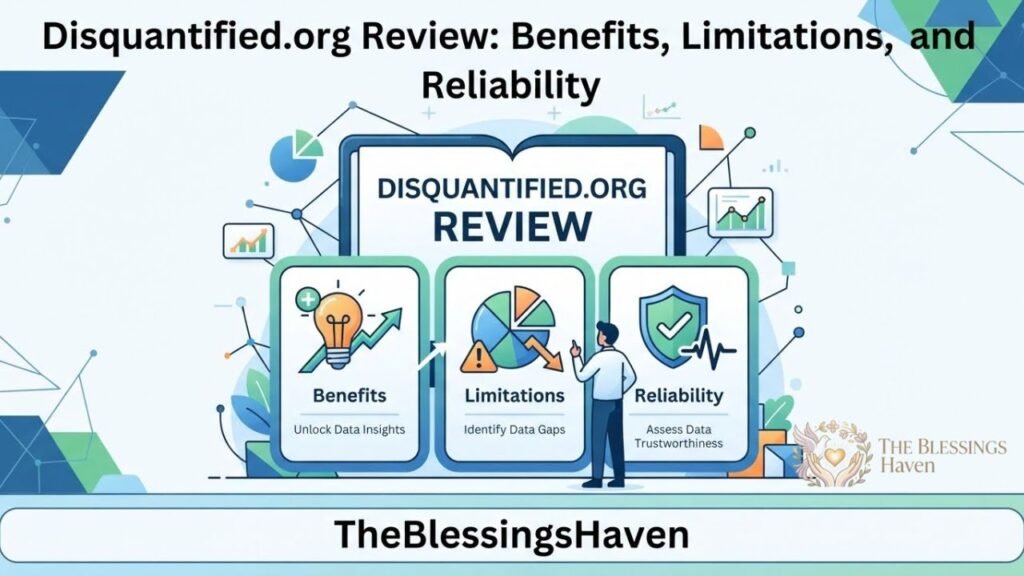
This Disquantified.org review considers how readers can evaluate the website as a source of financial information.
The site’s finance-related content may serve as a starting point for readers who want to explore budgeting, saving, borrowing, and investing concepts. The usefulness of an individual article, however, depends on its accuracy, clarity, sourcing, and relevance.
Potential Benefits
- Finance-related articles can introduce readers to common money topics.
- Beginner-friendly explanations may help clarify unfamiliar terminology.
- Related subjects can encourage further research into personal finance.
- Online content can be accessed at a convenient time.
Limitations to Consider
- General information may not address individual financial circumstances.
- Some financial rules and figures change over time.
- The presence of an article does not establish the author’s professional qualifications.
- Promotional relationships or affiliate links, if present, may affect how recommendations should be interpreted.
- No article can guarantee investment results or eliminate financial risk.
How to Assess Reliability
Check author details, publication dates, references, calculations, and disclosure statements. Compare important claims with authoritative sources, such as government agencies, financial regulators, and original product documentation.
Overall assessment: Disquantified.org may be explored for general financial reading, but its credibility should be evaluated through individual articles and verifiable evidence. This guide does not establish independent verification of every claim published on the site.
Frequently Asked Questions About Finance WWW Disquantified .org
What is finance www disquantified .org?
It is a search phrase associated with finance-related articles on Disquantified.org, including content about budgeting, saving, investing, and money management.
Is Disquantified.org a financial advice service?
The existence of finance-related articles does not establish that the website provides regulated or personalized financial advice. Check its published disclosures and credentials.
Can beginners learn about investing through online finance articles?
Yes. Introductory articles can explain investment terminology, diversification, fees, and risk. Always verify information and review official investment documents before making decisions.
How can I improve my money management skills?
Start by tracking income and expenses, creating a realistic budget, setting savings goals, and reviewing debt obligations regularly.
Is Disquantified.org reliable?
Its reliability should be evaluated by checking individual articles for author expertise, accurate information, current publication dates, and credible references.
Should I use only one website for financial information?
No. Compare important claims with authoritative sources and seek qualified professional guidance for complex or high-impact financial decisions.
Final Thoughts on Finance WWW Disquantified .org
Finance www disquantified .org is a search phrase associated with financial content on Disquantified.org. Readers researching this topic can use the website as a starting point for exploring money management, budgeting, investment basics, and debt-related concepts.
The most important step is to move beyond simply reading financial information. Check the evidence, understand the limitations, and compare important claims with trusted sources before making decisions.
Financial literacy develops over time through consistent learning and practical experience. By building a realistic budget, managing borrowing carefully, and understanding investment risks, readers can become better prepared to evaluate their options.
You May More Read: Finance WWW Disquantified .org

Welcome to The Blessings Haven! Rathna is a passionate content creator sharing heartfelt blessings, inspirational quotes, prayers, and meaningful wishes, along with helpful technology articles, digital trends, and online guides.