


New York City has been shaped by people who work in very different fields. Some influence its skyline through real estate investment and property development, while others give its neighborhoods a cultural identity through films, businesses, and creative projects. Jerry Speyer and Robert De Niro represent these two sides of the city.
Jerry Speyer is a prominent real estate developer and a founding partner of Tishman Speyer, a global real estate investment and development firm. Robert De Niro, meanwhile, is an award-winning actor, film producer, and entrepreneur whose work extends beyond Hollywood into hospitality and cultural events.
The connection between Jerry Speyer and Robert De Niro is primarily their shared association with New York City, rather than an established direct business partnership. Their careers offer an interesting way to examine how commercial real estate, entertainment, civic leadership, and cultural initiatives contribute to the identity of Manhattan.
Understanding their individual achievements also reveals why New York continues to attract people who want to build businesses, create films, support institutions, and influence the city’s future.
Jerry Speyer: A Major Figure in New York Real Estate
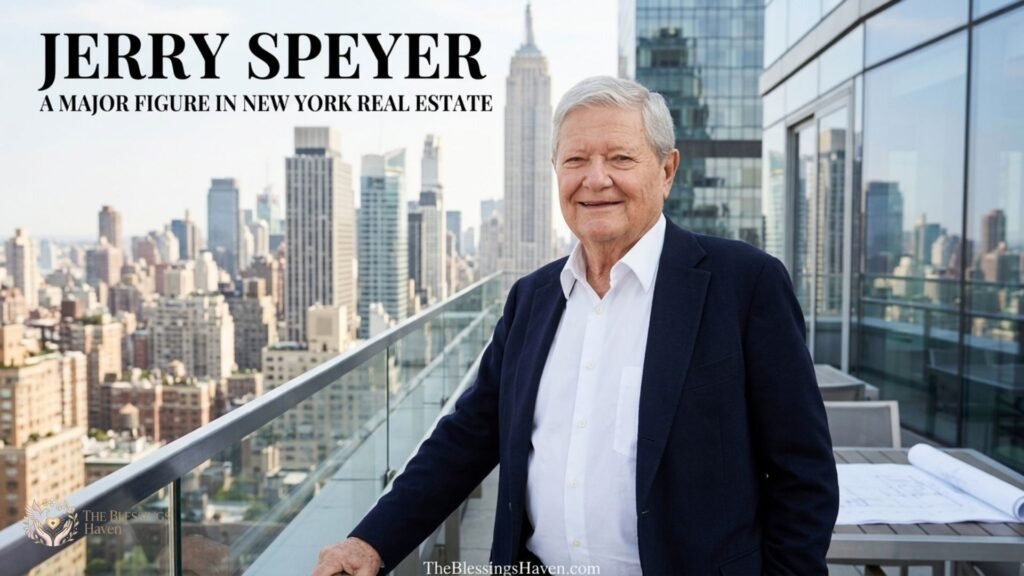
Jerry Speyer, formally known as Jerry I. Speyer, has played an important role in New York’s commercial real estate sector. As chairman and one of the founding partners of Tishman Speyer, he has been associated with the development, investment, and management of major properties.
His influence extends beyond individual buildings. Commercial real estate developers help determine how office districts operate, how businesses find space, and how major properties are maintained as cities change.
Speyer’s career reflects the long-term nature of real estate investment. Unlike industries in which success may depend on a single product or film, property development involves financing, planning, leasing, construction, tenant relationships, and ongoing management.
A large commercial building must serve its occupants while remaining financially viable. Its owner or operator also has to respond to changing workplace habits, economic conditions, and urban development patterns.
Speyer’s public profile extends into civic leadership. His documented affiliations include New York-Presbyterian Hospital, the Museum of Modern Art, Columbia Business School, and the National September 11 Memorial & Museum. These connections demonstrate how real estate leadership can overlap with education, healthcare, and cultural institutions.
His professional biography is available through Tishman Speyer’s official website, which provides additional context about his business and civic roles.
The Growth of Tishman Speyer
Tishman Speyer was established in 1978 by Jerry Speyer and Robert Tishman. The company developed into an international commercial real estate business with activities spanning property acquisition, investment, development, and management.
Its growth illustrates why successful real estate development requires more than buying land or constructing office buildings. A large property portfolio demands financial planning, careful management, and an understanding of how different locations serve businesses and residents.
Office buildings, residential developments, and mixed-use properties each create different challenges. Developers must consider tenant demand, building maintenance, transportation access, neighborhood needs, and the financial risks associated with substantial investments.
The company’s involvement in major properties also demonstrates how long-term real estate investment can influence a city’s business districts. Office towers can attract employers, support nearby restaurants and retailers, and create demand for transportation and other services.
The history of Tishman Speyer is therefore closely connected to the broader story of commercial property in New York. Its work provides an example of how private investment and urban development interact over decades.
For Speyer, the company’s development represents a central part of his professional legacy. It connects his business leadership with the physical growth of New York and other cities.
Jerry Speyer and New York’s Landmark Properties
New York’s identity is closely tied to its architecture. Buildings such as Rockefeller Center and the Chrysler Building have become recognizable symbols of Manhattan, attracting workers, visitors, businesses, and architectural enthusiasts.
Tishman Speyer has been associated with landmark commercial properties at different points in their histories. These relationships are worth examining because managing a famous building can involve preserving its architectural character while keeping it functional for modern tenants.
Rockefeller Center offers a useful example of how real estate and public life intersect. Its offices, retail spaces, public areas, and seasonal attractions make it more than a collection of commercial buildings. It is also a significant part of New York’s cultural and business environment.
The Chrysler Building represents another side of Manhattan’s architectural identity. Its distinctive design makes it a landmark of Art Deco architecture, a style that influenced skyscrapers and other buildings around the world.
Tishman Speyer’s historical association with such properties illustrates the company’s experience with significant commercial buildings. However, ownership and management arrangements can change over time, so historical involvement should not automatically be interpreted as current ownership.
These Tishman Speyer landmark buildings also demonstrate how commercial properties can become part of a city’s wider identity. They serve economic purposes while remaining important architectural and historical features of New York.
Jerry Speyer’s Civic and Community Contributions
Jerry Speyer’s influence is not limited to real estate investment. His involvement with civic, educational, medical, and cultural institutions shows how business leaders can contribute to public life outside their primary industries.
Education is one important area of this connection. Universities and business schools help develop future professionals, support research, and bring together people from different backgrounds. Leaders with experience in finance and property development can contribute industry knowledge and institutional support to these environments.
Healthcare and cultural institutions also play an important role in New York’s development. Hospitals serve communities, museums preserve and exhibit artistic achievements, and memorial organizations help maintain the public memory of significant historical events.
Speyer’s documented institutional affiliations provide concrete examples of this broader civic involvement. They are more useful for understanding his public role than making vague claims about his philanthropy or assuming that every institutional connection represents a particular financial contribution.
His career demonstrates that the influence of a prominent real estate developer can extend into the institutions that help a city educate its population, care for residents, and preserve its cultural life.
Robert De Niro: From New York Actor to Global Star
Robert De Niro was born in New York City in 1943 and developed into one of the best-known performers in American cinema. His career encompasses acting, producing, directing, and business ventures, but his film performances remain the foundation of his reputation.
De Niro became particularly associated with character-driven films in which preparation, physical transformation, and detailed performances play important roles. His collaborations with director Martin Scorsese helped establish a significant chapter in American filmmaking.
Films such as Mean Streets, Taxi Driver, Raging Bull, Goodfellas, and Cape Fear demonstrate the range of their work together. De Niro’s performances have included troubled outsiders, complex criminals, determined athletes, and characters whose behavior reveals larger social tensions.
His achievements helped establish him as more than a commercially successful actor. He became a respected figure in the film industry whose work has influenced subsequent performers and filmmakers.
The connection between Robert De Niro and New York is also personal and cultural. The city provides the setting for many of his best-known films, while his professional and entrepreneurial activities have strengthened his association with Manhattan.
For readers exploring New York cultural figures, De Niro represents the way an artist can build an international career while maintaining a meaningful connection to the city where he was born.
Robert De Niro’s Academy Awards and Film Legacy

Robert De Niro’s film legacy includes two competitive Academy Award wins, each recognizing a different aspect of his acting ability.
His first win was for Best Supporting Actor for his portrayal of young Vito Corleone in The Godfather Part II (1974). The role required him to portray a younger version of a character made famous by Marlon Brando in the original film.
His second win was for Best Actor for playing boxer Jake LaMotta in Raging Bull (1980). The performance became one of the defining roles of his career and demonstrated his commitment to physically and psychologically demanding characters.
| Film | Role | Achievement |
|---|---|---|
| The Godfather Part II | Vito Corleone | Academy Award for Best Supporting Actor |
| Raging Bull | Jake LaMotta | Academy Award for Best Actor |
| Taxi Driver | Travis Bickle | Academy Award nomination for Best Actor |
| Goodfellas | Jimmy Conway | Acclaimed performance in a major Scorsese film |
His work with Martin Scorsese remains especially important when discussing his career. Their collaborations explored crime, identity, ambition, violence, and the psychological costs of certain lifestyles.
De Niro’s filmography also includes comedies, dramas, crime films, and work behind the camera. This variety has allowed him to remain relevant across multiple generations of moviegoers.
His Academy Awards recognize specific performances, but the broader Robert De Niro film legacy rests on decades of work, his collaborations with influential filmmakers, and his ability to portray very different personalities convincingly.
De Niro’s Work Outside Hollywood
Robert De Niro’s professional activities extend beyond acting. He has worked as a producer and has participated in businesses connected with film, restaurants, hotels, and hospitality.
In 1989, he co-founded Tribeca Productions with producer Jane Rosenthal. The company gave him a role in developing film and television projects beyond his work as a performer.
De Niro is also closely associated with Nobu, the international restaurant and hospitality business created alongside chef Nobu Matsuhisa and businessman Meir Teper. Their partnership brought together culinary expertise, business development, and De Niro’s public profile.
These activities demonstrate how an established performer can use experience and professional relationships to enter other industries. However, running a production company and participating in a hospitality business involve different responsibilities from acting in a film.
For Robert De Niro, business ventures have created another dimension to his public career. They also strengthen his relationship with New York, where entertainment, restaurants, hotels, and tourism are closely connected.
His career outside Hollywood shows why he is often discussed as an entrepreneur as well as an actor. It also offers a useful contrast with Jerry Speyer, whose principal professional identity comes from commercial real estate rather than entertainment.
Why Tribeca Matters to Robert De Niro
Tribeca, a neighborhood in Lower Manhattan, is an important part of Robert De Niro’s connection to New York. Known today for residential lofts, restaurants, galleries, and creative businesses, it has changed considerably from its earlier industrial character.
The neighborhood’s history reflects the changing economic geography of Manhattan. As manufacturing and warehouse uses declined in many areas, former industrial buildings became attractive for residential conversions and creative activities.
De Niro’s association with Tribeca developed through his production and cultural projects. His work helped bring attention to the neighborhood’s potential as a place where film, restaurants, and community life could coexist.
However, Tribeca’s transformation should not be attributed to one person. Residents, property owners, artists, developers, local businesses, and city policies all contributed to its evolution.
De Niro’s role is best understood as one part of that broader story. His projects became associated with the neighborhood and helped strengthen its cultural profile, but the area’s growth resulted from many overlapping efforts.
The Tribeca neighborhood illustrates how industrial districts can evolve into places known for residential life, creative activity, and cultural identity.
The Tribeca Film Festival
The Tribeca Film Festival began as a response to the challenges Lower Manhattan faced after the September 11 attacks. Its founders—Robert De Niro, Jane Rosenthal, and Craig Hatkoff—wanted to support the area’s economic and cultural revitalization through storytelling and public events.
The festival was founded in 2001, while its inaugural event took place in 2002. That distinction is important because the planning and founding preceded the first festival.
The initial event brought filmmakers, audiences, and other participants to Lower Manhattan at a time when community recovery was a major concern. Film screenings, discussions, and related activities provided opportunities for people to gather and helped draw attention to the neighborhood.
Over time, the festival developed beyond its initial focus on cinema. The Tribeca Festival now celebrates storytelling across film, television, music, games, audio, and immersive experiences. Its programming has created a platform for established artists and emerging voices.
For De Niro, the festival is one of his most visible contributions outside acting. It reflects an effort to support filmmaking while using culture to bring people together.
The official Tribeca Festival history explains the organization’s founding and its continuing emphasis on creative expression.
How Tribeca Became a Different Neighborhood
Tribeca’s transformation provides a broader example of how a city changes when economic activities, property uses, and residents shift over time.
Historically, parts of the neighborhood were dominated by warehouses, manufacturing facilities, and commercial buildings connected to New York’s industrial economy. These structures reflected the area’s practical purpose rather than the residential and cultural identity now associated with it.
As industrial activity changed, some of these buildings became suitable for conversion into loft apartments and other uses. Artists and creative businesses found opportunities in spaces that could accommodate studios, galleries, and unconventional working environments.
Residential investment subsequently helped change the neighborhood’s population and commercial activity. Restaurants, shops, and services developed alongside housing, while cultural events brought visitors to the area.
The Tribeca Film Festival added another element by creating a recurring event that linked entertainment with community engagement. Its contribution was meaningful, but it formed part of a transformation that had begun earlier and involved many different participants.
Tribeca’s history shows that neighborhood redevelopment rarely follows a single plan or depends on one influential individual. The balance between property development, local businesses, residents, and cultural institutions shapes how an area evolves.
This wider context is essential when examining Robert De Niro’s influence on Tribeca. His cultural initiatives form a recognizable part of the neighborhood’s story without explaining every aspect of its development.
You May Like to Read: Happy Labor Day Wishes Heartfelt Messages, Greetings & Quotes 2026
So, What Is the Connection Between Jerry Speyer and Robert De Niro?

The main connection between Jerry Speyer and Robert De Niro is their association with New York City and their influence in different professional fields.
Speyer represents commercial real estate, investment, property management, and civic leadership. His work through Tishman Speyer is connected to major buildings and the business infrastructure that supports New York’s economy.
De Niro represents film, entertainment, cultural entrepreneurship, and hospitality. His acting career, production work, and involvement with the Tribeca Festival have connected him to the city’s artistic and cultural identity.
Their professional paths therefore offer two ways to understand how influential people contribute to a city. One works primarily through buildings, investment, and institutional leadership. The other works through storytelling, business ventures, and cultural events.
It is important not to confuse this shared urban connection with evidence of a direct partnership. The available biographical and institutional information establishes their separate accomplishments, but it does not establish a major business collaboration between them.
The Jerry Speyer and Robert De Niro connection is most useful as a comparison of different forms of influence rather than as a story about a joint project.
Did Jerry Speyer and Robert De Niro Ever Work Together?
There is no well-established public record in the sources reviewed for this article demonstrating that Jerry Speyer and Robert De Niro worked together on a major business project.
Their main professional activities belong to different sectors. Speyer is associated with commercial real estate and civic institutions, while De Niro’s best-known work involves acting, production, hospitality, and cultural events.
That does not prove the two men have never met or interacted. It simply means that a direct professional relationship should not be presented as an established fact without credible documentation.
| Question | What the available information supports |
|---|---|
| Are they associated with New York City? | Yes, through their respective careers and activities |
| Do they represent the same industry? | No; their primary professional fields differ |
| Is a major joint business project established? | Not by the sources reviewed for this article |
| Can their influence be compared? | Yes, through their different contributions to business and culture |
This distinction helps keep the discussion accurate. Their stories can be compared meaningfully without inventing a partnership or suggesting that their professional paths necessarily intersected.
Real Estate and Culture: Two Different Ways to Shape a City
Real estate and culture may appear to be separate worlds, but both influence how people experience a city.
Real estate developers provide buildings and spaces where businesses operate, residents live, and institutions serve the public. Their decisions can affect employment, investment, transportation patterns, and the character of neighborhoods.
Cultural figures contribute in different ways. Actors, filmmakers, producers, and event organizers create stories and experiences that influence how people understand a city. Film festivals, restaurants, galleries, and performances can attract visitors and strengthen local connections.
The careers of Jerry Speyer and Robert De Niro illustrate this difference. Speyer’s work is associated with property investment and the physical environment of business districts. De Niro’s work has helped support filmmaking, hospitality, and cultural activities connected with Lower Manhattan.
Neither type of influence operates in isolation. A cultural venue needs a physical location, while commercial areas can benefit from cultural attractions that encourage people to visit and spend time there.
New York’s character has developed through this interaction between buildings, businesses, public institutions, and creative activity. Real estate and culture are different forces, but together they help shape the city’s economy and identity.
Jerry Speyer vs. Robert De Niro
Although both men are influential New York figures, their professional backgrounds and public achievements differ substantially.
| Category | Jerry Speyer | Robert De Niro |
|---|---|---|
| Main field | Commercial real estate | Film and entertainment |
| Major organization | Tishman Speyer | Tribeca Productions |
| Notable achievement | Real estate development and investment leadership | Two competitive Academy Award wins |
| New York connection | Commercial properties and civic institutions | Film, hospitality, and Tribeca cultural initiatives |
| Broader influence | Business development and the built environment | Entertainment and cultural entrepreneurship |
This comparison highlights their distinct legacies without suggesting that one person’s career is more important than the other’s. Their contributions are best judged within the industries and institutions in which they work.
Frequently Asked Questions
What is the connection between these two New York figures?
Jerry Speyer and Robert De Niro are connected through their association with New York City. Speyer is known for commercial real estate and civic leadership, while De Niro is recognized for acting, film production, hospitality, and cultural initiatives.
How is Jerry Speyer connected to New York?
Jerry Speyer co-founded Tishman Speyer in 1978 and has been involved in commercial real estate and civic institutions. His professional career connects him to New York’s property sector and broader institutional life.
What is Robert De Niro known for in New York?
Robert De Niro is known for his New York roots, acclaimed film career, business ventures, and involvement in founding the Tribeca Film Festival with Jane Rosenthal and Craig Hatkoff.
Did these two men work together?
The sources reviewed for this article do not establish a major direct business partnership between Jerry Speyer and Robert De Niro. Their documented achievements are associated with different professional fields.
Why are they mentioned together?
They can be discussed together when exploring how influential people shape New York through different industries. Their careers illustrate the relationship between real estate development, entertainment, business, and cultural identity.
What industries do these two figures represent?
Jerry Speyer primarily represents commercial real estate, investment, and property development. Robert De Niro represents acting, filmmaking, production, and hospitality-related business ventures.
What makes their New York influence different?
Speyer’s influence is associated with commercial properties, real estate investment, and civic institutions. De Niro’s influence comes from film performances, production, hospitality, and cultural events such as the Tribeca Festival.
Conclusion
Jerry Speyer and Robert De Niro represent two distinct forms of influence on New York City. Speyer’s career is closely connected to commercial real estate, Tishman Speyer, landmark properties, and civic leadership. De Niro’s achievements span acting, film production, hospitality, and cultural initiatives that have helped strengthen Lower Manhattan’s identity.
Their stories demonstrate that a city’s development depends on more than buildings or entertainment alone. Businesses, public institutions, filmmakers, entrepreneurs, residents, and cultural organizations all contribute to the character of urban life.
Although the available evidence does not establish a major direct business partnership between the two men, comparing their careers offers a useful perspective on New York. Jerry Speyer and Robert De Niro illustrate how real estate and culture can shape the same city in very different yet meaningful ways.

Welcome to The Blessings Haven! Rathna is a passionate content creator sharing heartfelt blessings, inspirational quotes, prayers, and meaningful wishes, along with helpful technology articles, digital trends, and online guides.