


Growth Navigate is a term associated with startup resources, business development strategies, funding guidance, and tools that help entrepreneurs make better growth decisions. It can refer to a general approach to business growth or to specific websites using the Growth Navigate name. For example, GrowthNavigate.net describes its focus as startup tools, funding opportunities, and practical business strategies, while other similarly named websites present different services.
Growing a startup requires more than a creative idea or an attractive product. Entrepreneurs must understand their target market, manage limited resources, attract customers, and make informed decisions about spending and expansion. Without a clear plan, even promising businesses can struggle to achieve sustainable growth.
For startup founders, the central idea is straightforward: identify what is holding the business back, choose the right resources, manage finances carefully, and measure progress consistently.
This guide explores Growth Navigate, startup tools, funding opportunities, business growth strategies, and practical ways to build a stronger business.
What Is Growth Navigate?

Growth Navigate can describe a structured approach to helping startups and small businesses move from their current position toward specific business goals. It connects planning, technology, financial management, customer acquisition, and operational improvement.
Instead of pursuing growth without direction, businesses can use this approach to determine which activities deserve attention first.
For example, a startup might have an excellent product but struggle to attract customers. Its main priority may be improving marketing, understanding customer needs, or building a reliable sales process. Another company may already have steady demand but lack the working capital required to hire employees or purchase inventory.
Both businesses want to grow, but their challenges require different solutions.
A practical Growth Navigate strategy begins by evaluating the company’s current position and identifying its most important obstacle. The next step is to select suitable tools, establish realistic goals, and track measurable results.
The approach can benefit startups, entrepreneurs, small business owners, online businesses, and growing teams looking for a more organized way to make decisions.
Why Is Growth Navigate Important for Startups?

Startups frequently operate with limited budgets, small teams, and uncertain revenue. Every decision can affect their ability to survive and expand.
Growth Navigate emphasizes prioritization rather than simply spending more money or adopting more technology.
Here are several reasons why this approach can be valuable:
- Clearer business direction: A defined strategy helps founders understand which goals matter most.
- Better resource management: Businesses can allocate money, time, and employees to activities with measurable value.
- Smarter technology decisions: Startups can avoid paying for software they do not need.
- Improved customer acquisition: Marketing and sales activities can focus on specific audiences and business outcomes.
- Stronger financial planning: Monitoring expenses and cash flow helps founders prepare for unexpected challenges.
- Sustainable expansion: Businesses can grow at a pace their finances and operations can support.
The main benefit is improved decision-making. Growth becomes easier to manage when founders understand their priorities, evaluate performance, and adjust their plans as conditions change.
Growth Navigate Startup Tools
Growth navigate startup tools are software applications, digital resources, and business systems that help entrepreneurs manage daily operations and support expansion.
The best tools depend on the company’s stage, team size, budget, and objectives. A small startup does not necessarily need the same technology stack as a business with several departments.
The goal is to choose tools that solve real problems rather than collecting applications simply because they are popular.

Project Management Tools
Project management software helps teams organize tasks, assign responsibilities, establish deadlines, and monitor progress.
These tools are especially useful when several people are working on product development, marketing campaigns, customer support, or business operations.
A shared project management system can reduce confusion and make it easier to identify delays before they affect important deadlines.
Customer Relationship Management Software
Customer relationship management, commonly known as CRM, helps businesses organize customer information, track sales opportunities, and manage communication.
A CRM system can show which prospects need follow-up, where customers enter the sales process, and which opportunities are most promising.
This information helps sales teams maintain consistent communication and reduces the risk of losing potential customers because of missed follow-ups.
Analytics and Performance Tracking
Analytics tools help founders understand how visitors discover their websites, which marketing channels attract customers, and what users do after arriving.
For example, website analytics can reveal whether organic search, social media, referrals, or paid advertisements generate valuable traffic.
Businesses should connect these findings to meaningful outcomes, such as qualified leads, purchases, repeat customers, or revenue. High traffic alone does not guarantee business success.
Marketing and SEO Tools
Marketing tools support content planning, keyword research, search engine optimization, email campaigns, and social media management.
For businesses that depend on online visibility, SEO tools can help identify relevant search queries, evaluate website performance, and uncover content opportunities.
However, publishing more content is not always the answer. Businesses should prioritize helpful information that addresses genuine customer questions and supports their overall marketing goals.
Financial Management Tools
Financial software helps businesses track income, expenses, invoices, budgets, and cash flow.
These records provide a clearer picture of how much money enters the business, how much leaves it, and whether current operations are financially sustainable.
Before purchasing additional software, startups should assess their actual needs, compare pricing, and confirm that the selected tools can work with their existing systems.
How to Choose the Right Startup Tools
Use these questions when comparing potential solutions:
- What specific business problem does the tool solve?
- Is it affordable within the current budget?
- Can the team learn and use it without excessive training?
- Does it integrate with existing software?
- Will it provide measurable benefits?
- Can the business upgrade or replace it as requirements change?
A simple, affordable system that the team uses consistently may be more valuable than an expensive platform with features nobody needs.
Growth Navigate Funding
Growth navigate funding relates to the financial resources businesses need to maintain operations, develop products, hire employees, acquire customers, and expand into new markets.
The phrase may appear in discussions about startup funding strategies or on websites that publish funding guidance. It should not be assumed to represent a single official funding program or a guaranteed source of capital.
Before pursuing any funding opportunity, entrepreneurs should identify their financial needs and understand the conditions attached to the money.
Common Funding Options for Startups
Bootstrapping
Bootstrapping means financing business activities through personal savings or revenue generated by the company.
It gives founders greater control and avoids the need to exchange ownership for investment. However, growth may be slower when available cash is limited.
Angel Investors
Angel investors are individuals who invest their own money in businesses, often in exchange for equity.
Some investors also offer industry knowledge, introductions, and strategic guidance. Founders should understand the valuation, ownership implications, and investment terms before accepting an offer.
Venture Capital
Venture capital firms invest in companies with the potential for substantial growth. This funding may help startups develop products, hire teams, and enter new markets.
In return, investors generally receive an ownership stake and may have certain governance or decision-making rights. Venture capital is not suitable for every business model.
Business Loans
Business loans provide capital that must generally be repaid according to agreed terms, often with interest and fees.
They may help established businesses purchase equipment, increase inventory, or manage working capital. Before borrowing, founders should assess repayment capacity, interest costs, collateral requirements, and the consequences of missed payments.
Grants and Startup Programs
Some governments, nonprofit organizations, universities, and private institutions offer grants or startup support programs.
Eligibility requirements vary. Applicants should review official program guidelines, application deadlines, permitted uses of funds, and reporting obligations.
Revenue-Based Financing
Some financing providers offer capital in exchange for a percentage of future revenue until an agreed repayment amount is reached.
This structure may appeal to businesses with predictable sales, but repayment obligations and total costs need careful evaluation.
How to Prepare for Startup Funding
A strong funding application explains why the business needs capital and how the money will support measurable objectives.
Founders should prepare:
- A clear business plan and revenue model.
- Financial statements or realistic financial projections.
- An explanation of the target market and competitive landscape.
- Evidence of customer demand, sales, or product traction where available.
- A detailed breakdown of how the funding will be used.
- A repayment plan or explanation of the expected investor return.
- Relevant legal, ownership, and business registration documents.
Avoid relying on unrealistic projections or guaranteed-return promises. Funding decisions depend on factors such as eligibility, financial performance, market conditions, investor preferences, and risk.
Important: Verify funding offers directly with the relevant lender, investor, or official program. Never pay an unexplained upfront fee or share sensitive financial information without checking the provider’s identity and legitimacy.
How Growth Navigate Helps Businesses Scale

Sustainable growth requires businesses to improve several connected areas rather than concentrating on a single metric.
Understand the Target Audience
Research customer needs, purchasing habits, common problems, and competing solutions. Customer interviews, surveys, support requests, and sales conversations can reveal opportunities that assumptions may overlook.
Build a Clear Growth Strategy
Set specific objectives, such as increasing qualified leads, improving customer retention, or reducing the time required to deliver a product.
Break larger goals into manageable tasks and assign responsibility for each activity.
Improve Customer Acquisition
Use appropriate channels to reach potential customers. Depending on the business, these may include SEO, content marketing, partnerships, email marketing, social media, or paid advertising.
Measure the cost and quality of the customers each channel generates instead of evaluating success by impressions or clicks alone.
Strengthen Customer Retention
Acquiring new customers can be expensive. Helpful onboarding, responsive support, consistent product quality, and regular feedback can encourage customers to remain engaged.
Track repeat purchases, cancellations, customer satisfaction, and other indicators that fit the business model.
Review Results Regularly
Review performance weekly or monthly, depending on the activity. Identify what is working, what is underperforming, and what needs to change.
Growth strategies should evolve as the business gains experience and new information.
Key Metrics to Track for Business Growth
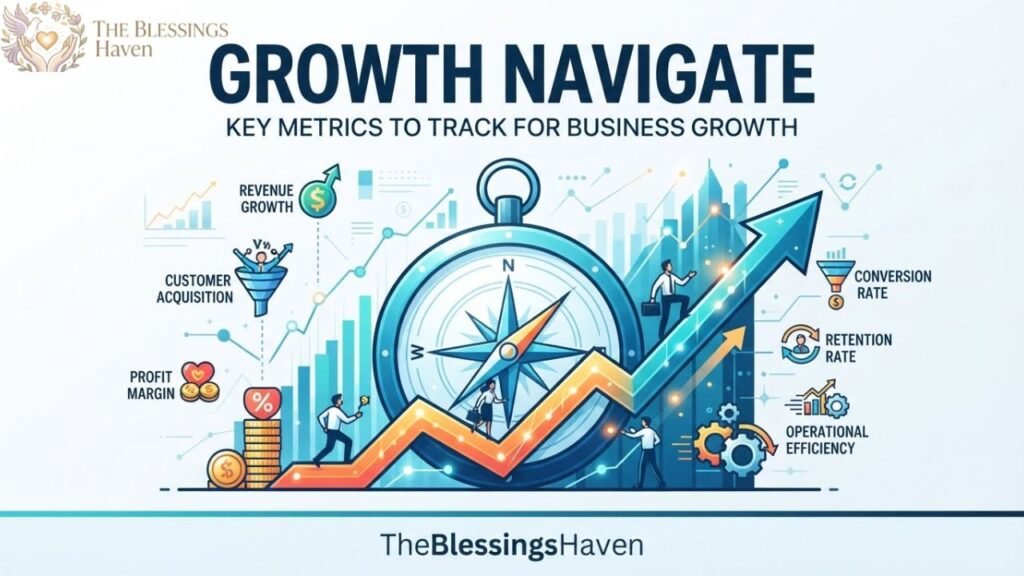
Business metrics help founders understand whether their growth strategy is producing meaningful results.
Useful measurements include:
- Revenue growth: Shows how sales change over time.
- Customer acquisition cost (CAC): Estimates the cost of acquiring a customer.
- Customer lifetime value (LTV): Estimates the value a customer generates over the relationship.
- Conversion rate: Measures the percentage of people who complete a desired action.
- Customer retention rate: Indicates how well a business keeps customers.
- Cash runway: Estimates how long available cash can support operations at the current spending rate.
- Profit margin: Shows the proportion of revenue remaining after relevant costs.
Not every metric is equally important for every company. A pre-revenue startup may focus on product validation and customer demand, while an established business may prioritize profitability, retention, and operational efficiency.
The most useful dashboard is one that helps the team make better decisions rather than simply displaying large amounts of data.
Common Growth Navigate Mistakes to Avoid
Even a well-planned growth strategy can fail when businesses overlook important risks.
- Buying too many tools: Excessive software subscriptions increase costs and can create fragmented information. Start with essential systems and expand when a clear need appears.
- Raising more money than necessary: Additional capital can create pressure to spend quickly. Estimate funding requirements carefully and connect spending to realistic milestones.
- Expanding before the business is ready: Entering new markets or hiring rapidly can strain cash flow and reduce service quality. Confirm that the business can support expansion.
- Ignoring customer feedback: A growth plan built on assumptions may miss changing customer needs. Gather feedback and use it to improve products and services.
- Tracking vanity metrics: More followers, website visits, or downloads may look impressive but do not always lead to revenue. Connect marketing activity to meaningful business outcomes.
- Trusting unverified providers: Research the background, terms, fees, and reputation of any platform offering business funding, consulting, or paid tools.
Avoiding these mistakes helps founders protect resources and build a stronger foundation for long-term success.
Is Growth Navigate Suitable for Small Businesses?

The Growth Navigate approach can be useful for small businesses because it emphasizes practical planning, careful budgeting, and selecting resources according to real needs.
A small online store might begin by improving product pages, tracking sales, and organizing customer communication. A consulting business might prioritize lead management, invoicing, and customer retention. A software startup might focus on product analytics, customer feedback, and development workflows.
Each business requires a different combination of tools and strategies.
If you are researching a particular Growth Navigate website, review its official information carefully. Check what it offers, whether its services match your needs, and whether claims about funding, results, or professional expertise can be independently verified.
The name alone does not establish that a website provides financing, guarantees business growth, or operates as a regulated financial service.
FAQs About Growth Navigate
What Is Growth Navigate?
Growth Navigate refers to an approach or online resource focused on startup tools, funding guidance, and strategies for sustainable business growth.
What Are Growth Navigate Startup Tools?
They are software and digital resources that help startups manage projects, marketing, customer relationships, analytics, and finances.
What Does Growth Navigate Funding Mean?
It refers to funding-related guidance or strategies that help businesses explore capital options and plan how to finance growth.
Is Growth Navigate a Legitimate Funding Platform?
The name is used in different online contexts. Verify the specific website, its services, and any funding claims before paying fees or sharing sensitive information.
How Can Startups Use Growth Navigate to Grow Faster?
Start by identifying your biggest business challenge, selecting tools that address it, setting measurable goals, and reviewing results regularly.
Conclusion
Growth Navigate represents a practical way to approach startup development by connecting business strategy, startup tools, funding decisions, and measurable performance.
For entrepreneurs, the most important step is to understand the current challenges facing the business before investing in new software, pursuing outside capital, or expanding operations. Choose tools that solve real problems, evaluate funding options carefully, and monitor the financial and customer metrics that matter most.
Remember that sustainable growth does not come from using the most applications or raising the largest amount of money. It comes from making informed decisions, serving customers effectively, managing resources responsibly, and improving the business consistently.
If you are exploring a specific Growth Navigate platform, verify its identity and services before relying on its claims or sharing financial information.

Welcome to The Blessings Haven! Rathna is a passionate content creator sharing heartfelt blessings, inspirational quotes, prayers, and meaningful wishes, along with helpful technology articles, digital trends, and online guides.


Pingback: RevolverTech Gaming Info: Best Guide for Gamers (2026)