
Droven.io AI Automation Tools: Amazing Facts Revealed 2026
Droven.io AI Automation Tools is a topic gaining attention as businesses look for smarter ways to save time, reduce repetitive work, and improve productivity. Artificial intelligence is changing how companies manage customer inquiries, organize data, handle emails, and complete daily tasks.
But before choosing any automation solution, it is important to understand what Droven.io actually offers and whether it provides software or information about emerging technologies. In this guide, we explore AI automation tools, their common uses, and how businesses can benefit from automated workflows.
You will also discover popular platforms, pricing considerations, security risks, and practical steps for getting started. Whether you run a startup, manage a small business, or work with a larger organization, understanding these options can help you make better decisions.
By examining business process automation, comparing established platforms, and reviewing important safety measures, you can determine whether Droven.io meets your needs or another solution is a better fit.
What Are Droven.io AI Automation Tools?
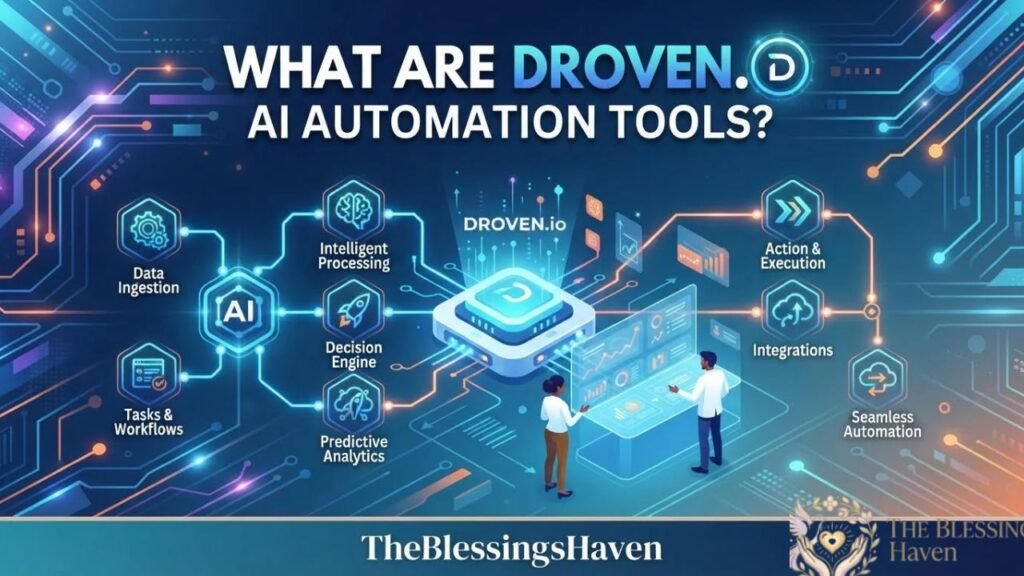
Droven.io is an online technology publication that covers artificial intelligence, digital transformation, and emerging technologies. Its homepage presents editorial content, including articles about AI applications and business processes, rather than a dedicated automation dashboard.
This distinction matters because an informational website and an automation platform serve different purposes.
An informational website helps you understand technologies, compare options, and learn how businesses use them. An automation platform lets you connect applications, build workflows, and execute tasks automatically.
Is Droven.io an AI automation platform?
Based on the publicly visible website, Droven.io is best understood as an editorial technology resource, not a standalone AI automation platform. The available homepage evidence does not establish that it offers its own workflow builder, automation engine, or paid software subscriptions.
If you want to automate business operations, you will need to evaluate a separate software platform.
Before making a purchase, look for these features:
- A working dashboard where you can create workflows.
- Documented integrations with your existing applications.
- Clear pricing, usage limits, and subscription terms.
- Security documentation and a privacy policy.
- Support resources and instructions for testing workflows.
Do not assume that Droven.io provides these features simply because its name appears alongside AI automation keywords.
What Droven.io publishes about AI automation
Droven.io’s public website includes content about AI tools, generative AI, and AI in business processes. These topics can help readers understand how emerging technologies affect everyday work.
You can use technology articles as a starting point when researching automation. However, reading about a tool is different from testing it in your own business.
Check the publication date, author information, supporting evidence, and links to original product documentation. When an article makes a claim about a software feature or price, verify that detail directly with the software provider.
The best approach is to treat Droven.io as a potential learning resource while evaluating actual automation software separately.
What AI Automation Tools Actually Do
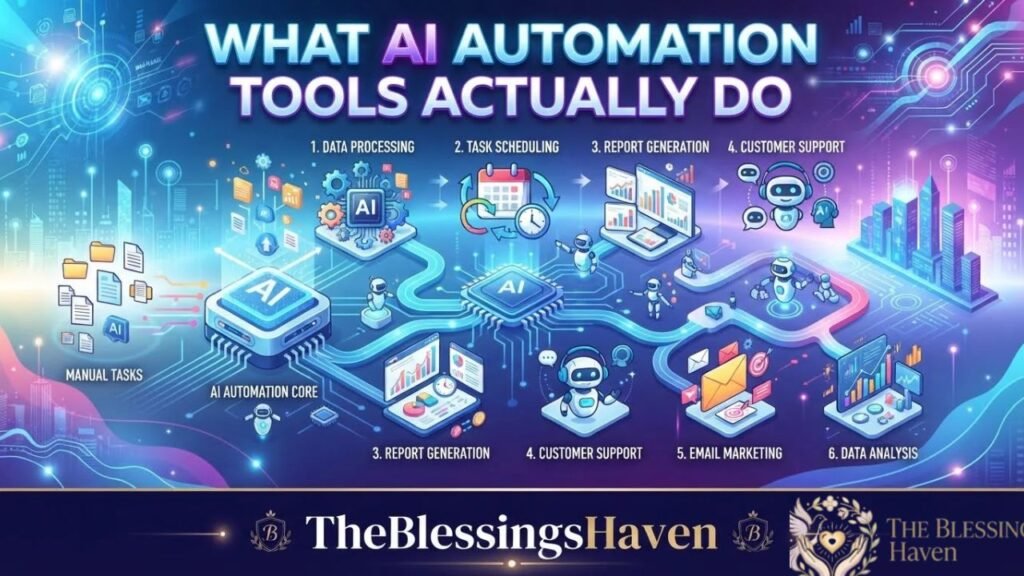
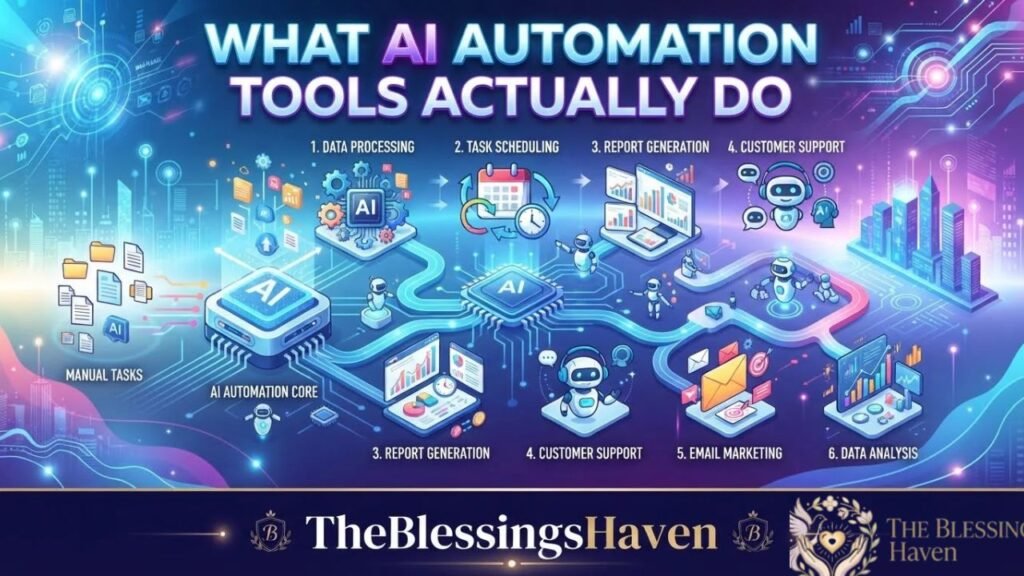
AI automation tools combine software workflows with artificial intelligence to handle tasks that would otherwise require repeated human effort.
Traditional automation follows predefined instructions. AI-powered automation can also interpret text, classify information, summarize documents, extract details, and generate responses.
For example, a conventional workflow might send an automatic confirmation whenever someone submits a form. An AI-enabled workflow could also identify the customer’s question, categorize its urgency, and prepare a suitable reply for review.
The exact capabilities depend on the software, connected applications, and AI model being used.
Rule-based automation vs. AI-powered workflows
| Feature | Rule-based automation | AI-powered automation |
|---|---|---|
| Main approach | Follows fixed rules | Interprets information using AI |
| Best for | Predictable, repeated tasks | Tasks involving text or variable inputs |
| Example | Send a receipt after payment | Classify a customer complaint |
| Reliability | Usually predictable when rules are correct | May produce inconsistent results |
| Human review | Needed for exceptions | Especially useful for uncertain decisions |
Neither approach is automatically better. Simple tasks often work best with ordinary automation because it is easier to test and maintain.
AI becomes useful when information is less structured or requires interpretation. A practical system may combine both approaches, using AI to understand a request and fixed rules to determine what happens next.
Common AI Automation Use Cases for Businesses
AI automation can support many business activities. The best starting point is usually a task that happens frequently, follows a recognizable process, and consumes time without requiring constant human judgment.
1. Email and customer inquiry management
Businesses receive repeated questions about prices, delivery times, appointments, refunds, and product features.
An automation workflow can sort incoming messages, identify common topics, and direct requests to the correct team. AI can summarize longer conversations or draft responses using approved information.
However, sensitive complaints, legal questions, and unusual requests should go to a human representative. Automatic replies should never promise something the business cannot deliver.
2. Lead management and follow-up
Sales teams often lose opportunities because they forget to follow up with interested prospects.
A workflow can capture information from a website form, add the lead to a customer relationship management system, and schedule a reminder. AI may also summarize the prospect’s needs or classify leads based on predefined criteria.
These systems help teams respond consistently. They should not make important decisions based on unreliable assumptions or sensitive personal information.
3. Reporting and data processing
Employees frequently copy information between spreadsheets, accounting systems, and reporting tools.
Automation can collect approved data, remove duplicate entries, update records, and prepare recurring reports. AI can help summarize trends or explain unusual changes in plain language.
Before trusting automated reports, validate calculations against the original records. AI-generated explanations should not replace accurate financial calculations or professional review.
4. Content and document workflows
Marketing teams can automate parts of their content process, including collecting topic ideas, organizing briefs, summarizing research, and preparing draft descriptions.
AI can also extract information from invoices, summarize meeting notes, or classify documents by subject.
Human review remains essential. Check facts, permissions, originality, tone, and confidential information before publishing content or sharing documents externally.
5. E-commerce and order operations
Online stores can use automation to update order records, send shipping notifications, categorize support tickets, and flag unusual transactions.
AI can help identify common customer concerns or summarize product feedback. Rule-based systems can handle predictable actions, such as sending an order confirmation after successful payment.
Refunds, suspicious transactions, and inventory corrections may need additional checks. A workflow should not be allowed to create costly errors simply because it can act quickly.
You May Also Like To Read: Client Case Aelftech Com: Amazing SEO Success 2026
AI Automation Tools for Startups, Small Businesses, and Enterprises
The right automation strategy depends on the size of your business, the complexity of your processes, and the risks involved.
Startups: begin with one repetitive task
Startups usually have limited budgets and small teams. Instead of building a complicated AI system, choose one task that takes up valuable time.
For example, a founder might automate lead capture from a website form and send the information to a spreadsheet or CRM. This creates a repeatable process without requiring a large technical investment.
Measure the time saved before adding more workflows.
Small and medium-sized businesses: assign an owner
Growing businesses may need automation across sales, marketing, customer support, and administration.
Assign one person to manage each important workflow. That person should monitor errors, review permissions, update instructions, and make sure the automation continues to work as the business changes.
Documenting workflows also prevents teams from depending on systems that nobody understands.
Enterprises: governance before autonomous agents
Large organizations often work with sensitive data, complex software, and strict compliance requirements.
They should establish access controls, audit logs, approval steps, and clear rules for AI-generated decisions. Automated systems should receive only the permissions they need.
For high-impact activities, such as approving payments or changing customer accounts, human authorization may be necessary. Greater autonomy should follow successful testing, not replace it.
Real AI Automation Platforms to Compare
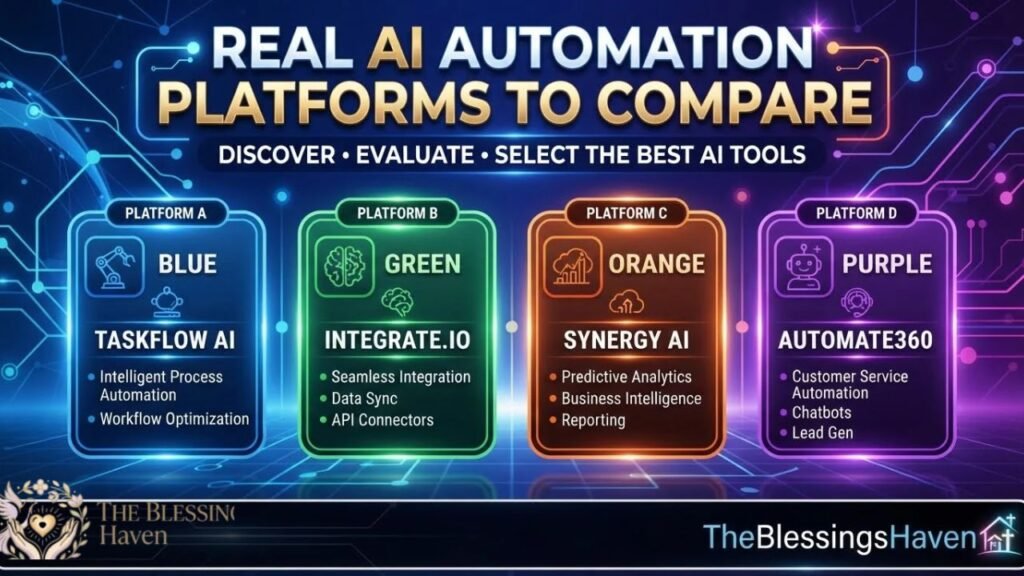
If you are researching Droven.io because you want software that actually runs workflows, consider comparing established alternatives.
A no-code automation service for connecting supported apps and triggering actions between them. It is worth exploring if you want to automate common business tasks without building everything from scratch.
Best for: beginners and teams seeking straightforward app integrations.
Make
Offers a visual workflow builder for connecting apps and designing multi-step processes. Its visual approach helps users understand how information moves through a workflow.
Best for: multi-step workflows and more detailed process control.
A workflow automation platform that supports visual workflows, integrations, and AI-related processes. It can appeal to technical teams that want more control over implementation and deployment.
Best for: technical users and teams needing flexible workflow design.
Microsoft Power Automate
Helps organizations automate business processes across supported applications, including parts of the Microsoft ecosystem.
Best for: businesses already working extensively with Microsoft services.
These platforms have different capabilities, learning curves, deployment options, and costs. Their suitability depends on your requirements, so verify current features and terms before choosing one.
How to choose an automation tool
Compare platforms using a real business task rather than marketing promises.
- Integrations: Does it connect to the apps you already use?
- Ease of use: Can your team build and maintain workflows?
- AI capabilities: Does it offer the specific AI functions you need?
- Reliability: Can you monitor failures, retry tasks, and inspect execution logs?
- Security: Can you control access and protect customer information?
- Cost: Can you estimate expenses at your expected workload?
- Scalability: Will the system still work when your business grows?
Test two or three shortlisted tools using the same example. A small trial will often reveal more than a long feature list.
Pricing, Credits, Tasks, and Workflow Executions
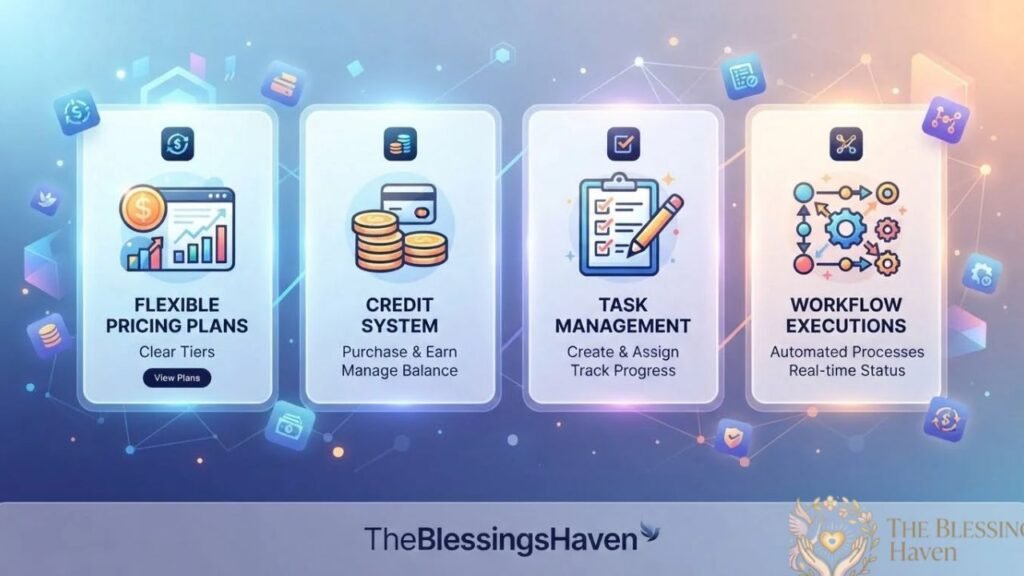
Automation pricing is not always based on the number of users. Many providers calculate costs using tasks, operations, workflow executions, AI credits, or other usage measures.
For example, one workflow might use several operations to collect a form submission, check a database, generate a summary, and send a notification. Depending on the platform’s billing rules, those steps may count separately.
AI models may also have their own usage charges.
Before subscribing, check:
- Monthly subscription fees and included usage.
- Charges for additional tasks or AI consumption.
- Premium integrations and advanced features.
- Execution limits, failed-run policies, and data retention.
- Cancellation terms and options for exceeding limits.
Does Droven.io have an automation subscription price? The publicly visible homepage presents an editorial website, not a software pricing structure. Do not assume it has paid automation plans without direct confirmation.
For actual automation software, compare the total expected monthly cost instead of focusing only on the cheapest entry-level plan.
Security, Privacy, and Automation Risks
Automation can improve efficiency, but poorly configured workflows can expose information or perform unwanted actions.
A system connected to email, customer records, and payment software may have access to valuable business data. Every additional connection needs a clear purpose and appropriate safeguards.
Follow these practices:
- Limit permissions: Give each integration access only to the information it needs.
- Protect credentials: Use secure credential storage and never place passwords in prompts or public documents.
- Review data policies: Understand how providers handle submitted information, AI processing, storage, and deletion.
- Require approvals: Keep human checks for refunds, payments, account changes, and other high-impact actions.
- Monitor execution logs: Look for unexpected behavior, repeated failures, and unusual activity.
- Plan for errors: Create a process for pausing workflows and correcting incorrect actions.
Before sharing customer information with any platform, review its official privacy and security documentation. If your business handles regulated data, confirm the applicable legal and contractual requirements.
Remember that AI output can be inaccurate. A well-designed workflow checks important results before acting on them.
A Practical 30-Day Plan to Launch One Automation
You do not need to automate your entire business at once. A focused 30-day plan gives you time to identify a problem, select a tool, test the workflow, and measure the results.
| Period | Action | Expected output |
|---|---|---|
| Days 1–5 | Select one repetitive task and document how it currently works | A process map and baseline measurements |
| Days 6–10 | Choose a suitable tool and verify integrations, access, and cost | A short vendor comparison |
| Days 11–15 | Build the smallest workable version | A test workflow |
| Days 16–20 | Test normal inputs, errors, duplicates, and interruptions | A list of fixes and known limitations |
| Days 21–25 | Run a limited pilot with monitoring and human oversight | Actual results from controlled use |
| Days 26–30 | Compare results with the manual baseline and decide whether to continue | A documented keep, revise, or stop decision |
What should you measure?
Use a few simple metrics to determine whether your automation delivers value.
| Metric | What it tells you |
|---|---|
| Time saved | How much manual work has been reduced |
| Error rate | How often the workflow produces mistakes |
| Completion rate | How many runs finish successfully |
| Cost per task | Whether automation is financially worthwhile |
| Response time | Whether customers receive faster service |
For example, suppose a task previously required 10 hours of work each week and automation reduces it to four hours. That represents six hours saved weekly, provided the remaining review and maintenance time is included in your calculation.
The goal is not simply to use AI. It is to produce measurable improvements without creating new risks.
Frequently Asked Questions About Droven.io an AI automation tool
Is Droven.io an AI automation tool?
Droven.io appears to be a technology publication covering AI, digital transformation, and related subjects. Its public homepage does not establish that it operates its own automation software.
Does Droven.io offer business automation software?
There is no clear evidence on its publicly visible homepage that Droven.io offers a dedicated business automation platform. If you need software that runs workflows, investigate providers such as Zapier, Make, n8n, and Microsoft Power Automate.
Are AI automation tools free?
Some platforms provide free plans, trials, or limited usage, while others require subscriptions. Free access may come with restrictions on tasks, integrations, AI usage, or execution frequency. Always check the provider’s current pricing and terms.
Are AI automation tools safe for customer data?
They can be used responsibly when configured correctly, but no tool is automatically safe in every situation. Review data handling policies, limit permissions, protect credentials, and require human approval for sensitive actions.
How can I tell whether an automation website is legitimate?
Check its official domain, company information, contact details, product documentation, privacy policy, and pricing terms. For software, look for a working product, verifiable integrations, and clear support options. Be cautious of unsupported claims, pressure to pay immediately, and requests for unnecessary sensitive information.
Conclusion
Droven.io AI automation tools is a useful search topic for people exploring artificial intelligence and business efficiency. However, it is important to distinguish the website’s educational content from actual automation software.
Based on its publicly visible homepage, Droven.io functions primarily as an editorial technology resource. It covers AI and related technologies but does not clearly present a dedicated workflow automation product.
If your goal is to learn about automation, explore relevant articles and verify their claims using official documentation. If you want to automate customer emails, sales follow-ups, reporting, or other business processes, compare established platforms and test them against your actual requirements.
Start with one repetitive task, establish a baseline, and measure the improvement after implementation. Pay attention to pricing, security, reliability, and human oversight before expanding.
The smartest approach is to choose automation based on proven business value, not the popularity of a keyword or website. A simple, reliable workflow that saves time is often more valuable than a complicated AI system that creates additional work.
#Droven.io AI automation tools

Welcome to The Blessings Haven! Rathna is a passionate content creator sharing heartfelt blessings, inspirational quotes, prayers, and meaningful wishes, along with helpful technology articles, digital trends, and online guides.






One Comment