
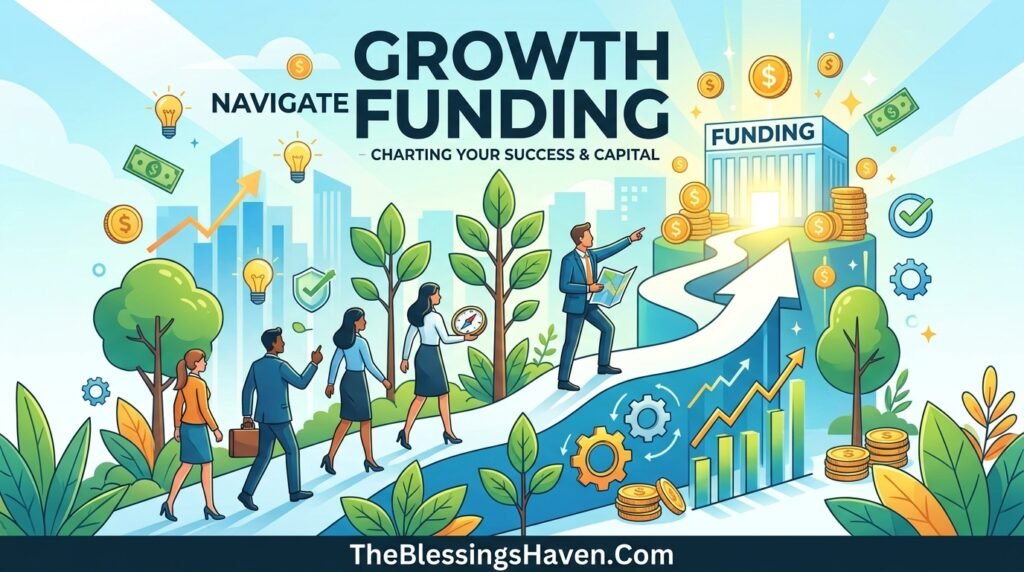

Growing a business sounds exciting until you reach the point where money becomes the biggest obstacle. You may have a strong idea, paying customers, and a clear growth plan, but expansion often requires more capital than your current cash flow can provide.
That is where Growth Navigate Funding becomes an important topic for entrepreneurs and growing companies.
Whether you need money for hiring, inventory, marketing, technology, equipment, or market expansion, choosing the right funding can make a major difference. But funding is not simply about getting the largest amount of money possible. The real goal is to find capital that fits your business, growth stage, and ability to manage repayment or ownership requirements.
“Good business funding does more than provide cash. It gives a company room to reach its next growth milestone.”
This guide explains what Growth Navigate Funding means, how business funding works, available financing options, important benefits and risks, and what you should check before accepting a funding offer.
What Is Growth Navigate Funding?
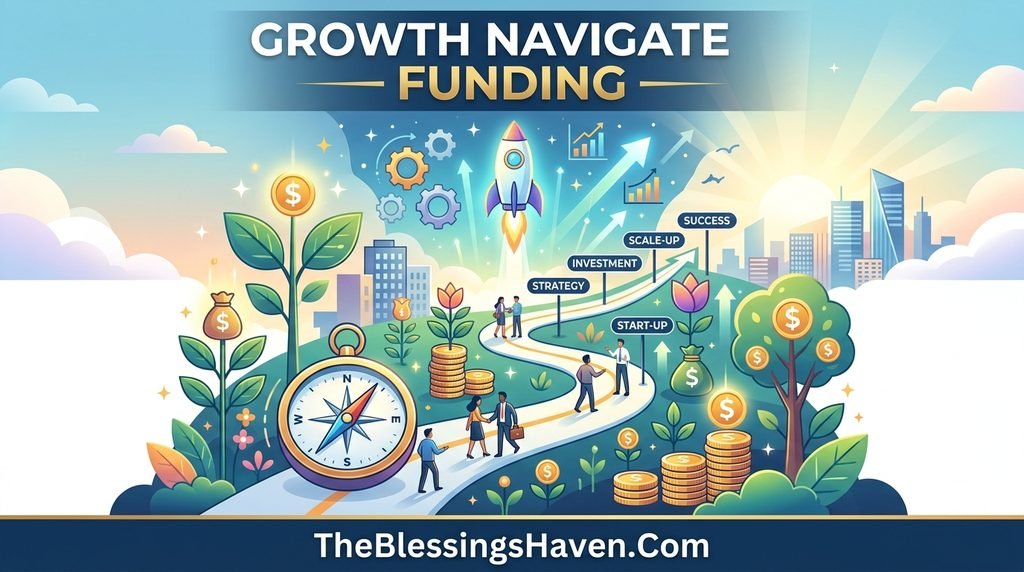
Growth Navigate Funding can be understood as a strategic approach to finding capital that helps a business grow.
Instead of asking only, “How much funding can I get?” business owners should ask:
- How much capital does my business actually need?
- What will the money be used for?
- How quickly can that investment generate results?
- Can the business handle repayment?
- Am I comfortable giving up equity?
- What will the total cost of the funding be?
The phrase Growth Navigate Funding is also associated online with businesses offering funding, financial advisory, and fundraising-related services. Because similar names can refer to different companies or websites, it is important to verify the exact provider before submitting financial information or signing an agreement.
In simple terms, the concept is about connecting business funding with a clear growth strategy.
Growth Navigate Funding at a Glance
| Feature | Details |
|---|---|
| Main purpose | Supporting business growth with appropriate capital |
| Potential users | Startups, entrepreneurs, and established businesses |
| Funding types | Loans, equity, investors, grants, and alternative financing |
| Common uses | Hiring, marketing, inventory, technology, equipment, expansion |
| Main benefit | Access to capital without guessing how much is needed |
| Main concern | Costs, repayment terms, ownership, and provider legitimacy |
| Best approach | Match funding with measurable business goals |
How Does Growth Navigate Funding Work?
A smart funding process starts long before a business applies for money.
First, the business needs to understand its current financial position. That means looking at revenue, expenses, cash flow, existing debt, profitability, and future costs.
Next comes the growth plan.
For example, suppose an online business wants to expand into a new market. It might need money for:
- Additional inventory
- Digital advertising
- New employees
- Website improvements
- Warehousing
- Customer support
- Market research
Rather than requesting an arbitrary amount, the owner can calculate the estimated cost of each requirement.
The next step is choosing the right financing method.
“The best funding strategy starts with the business goal, not with the funding offer.”
A company that needs short-term working capital may have very different needs from a startup looking for long-term investment.
Types of Business Funding
There is no single funding solution that works for every company. The right choice depends on revenue, business stage, risk tolerance, creditworthiness, growth potential, and ownership preferences.
Business Loans
A business loan provides capital that the company generally repays over an agreed period.
Loans can be useful for businesses with predictable revenue because the owner can maintain ownership while accessing additional capital.
Before accepting a loan, check:
- Interest rate
- Repayment period
- Monthly payment
- Origination or processing fees
- Collateral requirements
- Early repayment conditions
- Late payment penalties
A loan can be useful, but repayment pressure should never be ignored.
Angel Investment
Angel investors provide capital to startups and growing companies, often in exchange for equity.
An experienced angel investor may provide more than money. They can sometimes offer:
- Industry connections
- Business advice
- Mentorship
- Strategic guidance
- Access to future investors
The trade-off is ownership.
If you give an investor equity, you are giving up a portion of the company.
Venture Capital
Venture capital is generally aimed at startups with substantial growth potential.
VC funding can provide significant capital for companies that want to scale quickly.
However, venture capital often involves expectations around:
- Rapid growth
- Financial reporting
- Business milestones
- Investor involvement
- Future fundraising
- Company valuation
It may not be appropriate for every small business.
Grants
Business grants can be attractive because they may not require the same type of repayment or ownership exchange as loans and equity.
However, grants are often competitive and can have strict eligibility requirements.
Important: Be cautious of anyone claiming that you are guaranteed a grant without explaining the eligibility requirements and application process.
Revenue-Based Financing
Revenue-based financing allows a business to obtain capital and repay it based partly on future revenue.
This approach may appeal to companies with established sales but does not suit every business.
Always understand the exact repayment formula and total potential cost before agreeing to this type of financing.
What Can Funding Be Used For?
Business funding can support many different growth activities.
Hiring Employees
A growing business may need additional staff before it can increase its revenue.
Funding can help cover salaries and recruitment expenses while the company expands.
Marketing
Capital can be used for:
- Search engine optimization
- Paid advertising
- Social media campaigns
- Content marketing
- Branding
- Email marketing
Marketing investment should ideally have measurable objectives.
Inventory
Retail and e-commerce businesses often need working capital to purchase inventory before they generate sales from those products.
Technology
Companies may use funding for:
- Software
- Websites
- Cybersecurity
- Automation
- Cloud infrastructure
- Customer management systems
Expansion
A company entering a new location may need funding for offices, equipment, employees, advertising, and local operations.
“Funding works best when every dollar has a job.”
Why Funding Strategy Matters
Getting money is not the same thing as growing a successful business.
A company can raise substantial capital and still fail if it spends the money without a clear plan.
Imagine a startup receiving a large investment and immediately increasing its advertising budget, hiring too many employees, renting an expensive office, and launching several products at once.
If revenue does not grow as expected, the company could burn through its capital quickly.
A better approach is to connect funding with measurable milestones.
For example:
| Funding Goal | Possible Milestone |
|---|---|
| Marketing | Acquire a specific number of customers |
| Hiring | Increase production or service capacity |
| Inventory | Support a targeted sales increase |
| Technology | Reduce operating time or costs |
| Expansion | Enter a new market |
| Product development | Launch a new product |
This makes the funding easier to monitor.
Benefits of Growth Navigate Funding
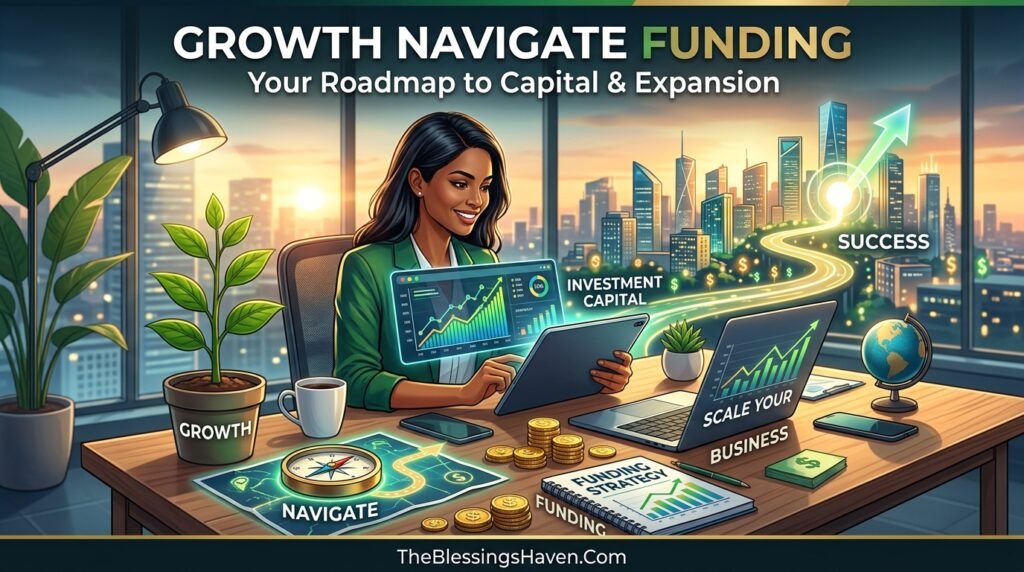
A structured approach to business funding can offer several advantages.
- Better financial planning: Understand your actual capital requirements.
- More funding choices: Compare different financing methods.
- Strategic growth: Connect money with specific business goals.
- Improved cash flow: Prepare for upcoming expenses.
- Investor preparation: Organize financial information before approaching investors.
- Greater flexibility: Choose financing based on your business situation.
- Professional guidance: Financial advisors can help explain complex funding decisions.
The biggest benefit is not necessarily the amount of money raised.
It is having a clearer financial path.
Potential Risks of Business Funding
- Every funding option comes with trade-offs.
- Loans create repayment obligations.
- Equity investment reduces ownership.
- Some financing products have fees that can significantly increase the overall cost.
- Certain investors may also expect a voice in major business decisions.
Before accepting funding, consider:
- Total cost
- Repayment obligations
- Interest rate
- Ownership dilution
- Investor rights
- Contract length
- Personal guarantees
- Collateral
- Early repayment conditions
“Never judge a funding offer by the amount you receive. Judge it by what the money will ultimately cost you.”
Is Growth Navigate Funding Legit?
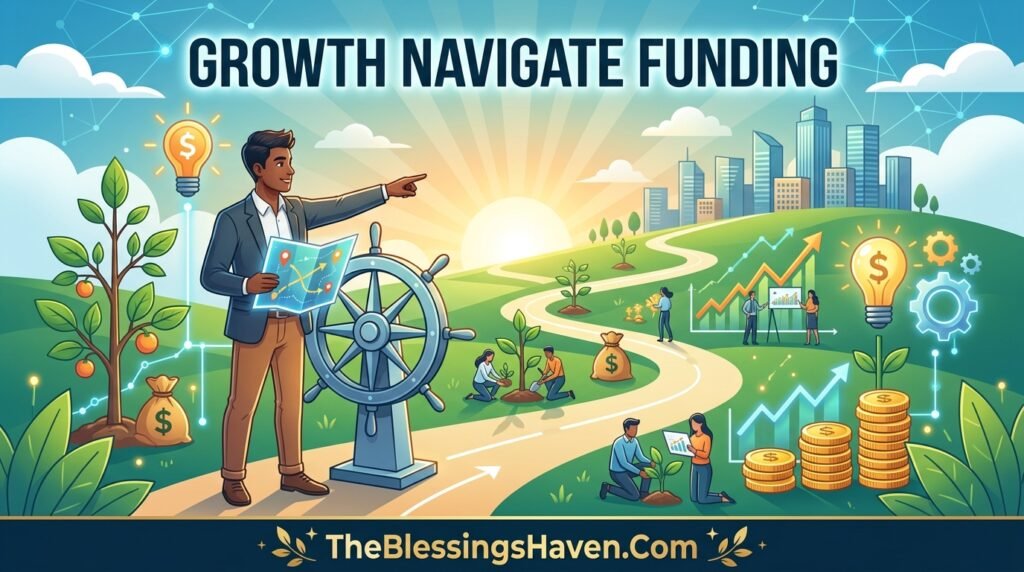
This question requires some caution because Growth Navigate is a name that can appear in different online contexts.
Some websites using the Growth Navigate name present services related to business funding, financial advisory, investment strategy, and financial technology. Other websites use similar wording for fundraising and startup advisory services.
Therefore, do not assume that every website containing the words Growth Navigate Funding represents the same organization.
Before working with a funding provider, verify its identity and business details.
Check These Things First
- Official website and domain
- Company registration information
- Physical business details
- Terms and conditions
- Privacy policy
- Service agreement
- Fees and commissions
- Refund policy
- Funding requirements
- Investor or lender relationships
- Independent reviews and reputation
Safety Tip: Never send sensitive financial documents simply because a website promises guaranteed funding or unusually fast approval.
Red Flags to Watch For
Business owners should be especially careful when dealing with financial services.
Potential warning signs include:
- Guaranteed funding regardless of financial circumstances
- Pressure to sign immediately
- Unexplained upfront fees
- Unclear contracts
- Unrealistic returns
- Vague company information
- Requests for sensitive information without a clear reason
- Claims that sound too good to be true
- Refusal to explain total costs
A legitimate funding process should provide clear information about requirements, costs, obligations, and risks.
Take your time.
Read the agreement.
Ask questions.
And verify the company independently.
How to Prepare for Growth Funding
A strong funding application starts with good preparation.
Before approaching a lender, investor, or funding advisor, organize your business information.
Prepare Your Business Plan
Explain:
- What your business does
- Who your customers are
- How you make money
- What makes your business different
- Where you want to grow
Organize Financial Records
Depending on the funding type, you may need:
- Revenue records
- Profit and loss statements
- Balance sheets
- Cash-flow statements
- Tax information
- Existing debt information
- Bank statements
Define Your Funding Requirement
Do not simply say, “I need money to grow.”
Explain exactly how much you need and why.
For example:
“We are seeking $100,000 to expand inventory, hire two employees, and increase our marketing budget over the next 12 months.”
That is much stronger than simply requesting $100,000 without an explanation.
Explain How the Money Will Create Growth
Show the connection between funding and results.
For example:
Funding → More inventory → More products available → More sales → Higher revenue
This gives lenders or investors a clearer picture of your strategy.
Who Can Benefit From Growth Navigate Funding?
Funding strategies can be useful for many types of businesses.
Startups
Startups may need money for product development, hiring, technology, marketing, and initial operations.
E-Commerce Businesses
Online stores may require working capital for inventory, fulfillment, advertising, and website improvements.
Service Businesses
Agencies, consultants, contractors, and other service businesses may use funding for employees, equipment, marketing, or expansion.
Established Companies
A profitable company may seek funding to enter new markets, purchase equipment, acquire another business, or launch new products.
The important question is not simply whether a company needs money.
It is whether the business has a clear and realistic plan for using that money.
Common Funding Mistakes to Avoid
Even good businesses can make poor financing decisions.
Avoid these common mistakes:
- Borrowing more than the business needs
- Ignoring the total cost of financing
- Choosing funding based only on speed
- Failing to read the contract
- Giving away too much equity
- Ignoring cash-flow projections
- Using long-term financing for short-term problems
- Accepting unrealistic investor promises
- Failing to compare multiple funding options
“Fast funding is not always good funding. The terms matter just as much as the speed.”
Frequently Asked Questions
What is Growth Navigate Funding?
Growth Navigate Funding helps businesses explore capital for growth, operations, and expansion.
How does Growth Navigate Funding work?
You identify your funding needs, choose an option, apply, and receive funds if approved.
Is Growth Navigate Funding legitimate?
Verify the company, website, terms, and credentials before sharing sensitive financial information.
What types of funding are available?
Common options include business loans, grants, angel investment, venture capital, and revenue-based financing.
What can business funding be used for?
It can cover marketing, hiring, inventory, technology, equipment, and business expansion.
Conlcusion
Growth Navigate Funding is ultimately about making smarter decisions around business capital. Whether a company chooses a loan, investor, grant, or another financing option, the goal should be the same: obtain capital that supports sustainable growth without creating unnecessary financial pressure.
The smartest business owners do not simply ask, “How much money can I get?”
They ask:
- How much do I actually need?
- What will I use it for?
- What will it cost?
- Can my business afford the obligations?
- How will this funding help me grow?
If you are researching a company or service using the Growth Navigate Funding name, verify the exact provider before sharing financial information. Check its website, business identity, terms, fees, contracts, and reputation.
“The right funding should move your business forward—not create a financial problem you have to solve later.”
With careful planning, realistic projections, and thorough due diligence, business funding can become a useful tool for reaching the next stage of growth.

Welcome to The Blessings Haven! Rathna is a passionate content creator sharing heartfelt blessings, inspirational quotes, prayers, and meaningful wishes, along with helpful technology articles, digital trends, and online guides.


Pingback: SimplifyDiggs Com Review: What Is It and Is It Legit? - TheBlessingsHaven