
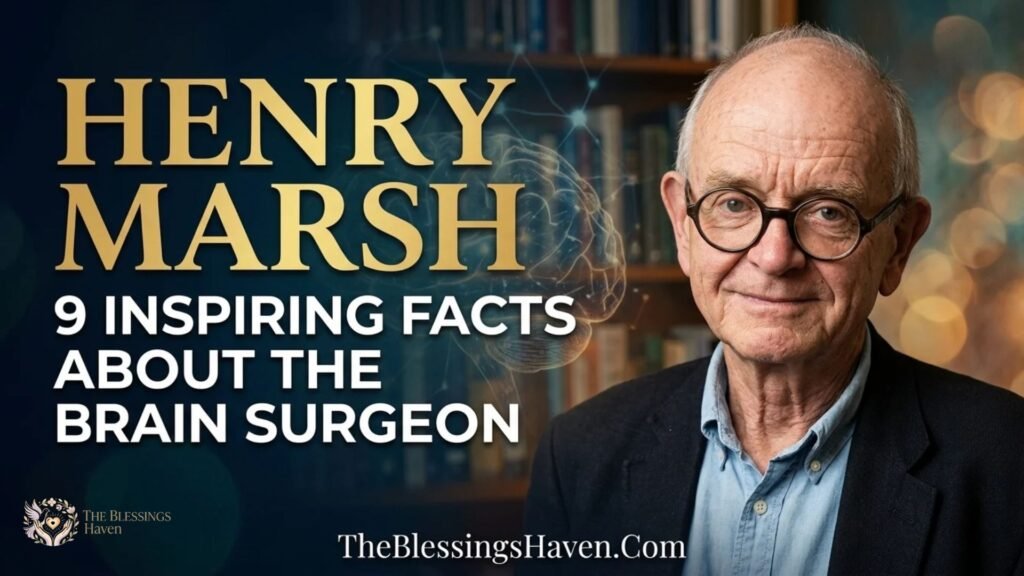

Henry Marsh is a renowned British neurosurgeon and author whose career has helped readers understand the complicated realities of brain surgery. Rather than describing medicine as a profession where every patient can be saved, he writes openly about uncertainty, difficult decisions, surgical mistakes, and the emotional responsibilities doctors carry.
His bestselling memoir Do No Harm brought these experiences to a broad audience. Later books, including Admissions and And Finally, explored the challenges of medical practice, his work in Ukraine, and his personal experience of serious illness.
The Henry Marsh biography is about more than a successful medical career. It is also a story of professional responsibility, humanitarian work, and the lessons that can emerge when doctors confront the limits of their own knowledge.
Quick Facts
Here are the essential facts about Henry Marsh neurosurgeon and author.
| Detail | Information |
|---|---|
| Full name | Henry Thomas Marsh |
| Date of birth | March 5, 1950 |
| Age in October 2026 | 76 years |
| Birthplace | Oxford, England |
| Profession | Neurosurgeon and author |
| Education | University of Oxford and Royal Free Hospital medical training |
| Hospital career | Atkinson Morley’s Hospital and St George’s Hospital, London |
| Wife | Kate Fox, social anthropologist and writer |
| Best-known book | Do No Harm |
| Other notable books | Admissions and And Finally |
| Major honor | Commander of the Order of the British Empire (CBE), 2010 |
| International connection | Long-running medical and educational work in Ukraine |
Marsh’s professional biography is documented by his publishers and literary organizations. His biographical details are also listed in public reference sources.
Who is Henry Marsh?
Henry Marsh became widely known for combining decades of neurosurgical experience with unusually direct writing about medical life. His memoirs describe what it means to make decisions that can permanently affect a patient’s future.
His career also took him beyond Britain. From the early 1990s onward, he developed a long connection with Ukrainian doctors and hospitals, helping share surgical knowledge and supporting improvements in neurosurgical care.
Through his books and documentary appearances, Marsh has encouraged readers to look beyond the technical side of medicine. He explains why communication, humility, and honesty matter when patients face serious illness.
Early Life and Family Background
Henry Marsh was born in Oxford, England, in 1950. He grew up in a family with strong intellectual connections. His father, Norman Marsh, was a legal scholar, while his mother, Christiane Christinnecke, had moved to England from Germany before the Second World War.
These family circumstances formed part of his early background, although his later career developed through his own interests in philosophy and medicine.
Marsh has also discussed how personal experiences can shape a doctor’s understanding of suffering. His family’s experience of serious illness, including a brain tumor affecting his young son, helped him appreciate the fear that patients and relatives experience when facing a life-threatening diagnosis.
The Henry Marsh family story is not the main focus of his public profile, but it helps explain why his writing often looks beyond clinical procedures to the experiences of patients and loved ones.
Education and University Years
Marsh first studied Politics, Philosophy and Economics at the University of Oxford. He subsequently studied medicine at the Royal Free Hospital in London.
His educational path combined the study of human society and ideas with medical science. That combination is reflected in his writing, which often considers questions about responsibility, consciousness, suffering, and death.
After qualifying as a doctor, he pursued a career in neurosurgery. In 1984, he became a Fellow of the Royal College of Surgeons, an important milestone in his professional development.
His later books demonstrate that his interests continued to extend beyond medical techniques. He writes about the philosophical questions that arise when a doctor must decide whether an operation is likely to help, what risks are acceptable, and how to discuss uncertain outcomes honestly.
How Did He Become a Brain Surgeon?

Marsh entered neurosurgery because of his interest in the human brain and the demanding nature of the specialty. Neurosurgeons treat conditions affecting the brain, spine, and nervous system, often working in situations where the consequences of a decision can be profound.
His experience as a parent also influenced his perspective. Marsh has discussed how his young son’s brain tumor and survival gave him a more personal understanding of the anxiety families experience when a child needs serious medical treatment.
Neurosurgery requires more than steady hands. Specialists must interpret scans, assess possible benefits and risks, explain treatment choices, and make decisions when there may be no completely safe option.
The Henry Marsh career became particularly notable because he later wrote honestly about the limits of surgical skill. His memoirs explain that an operation can be technically successful yet still leave a patient with complications, while some difficult decisions must be made without certainty about the final outcome.
Starting His Medical Career
Marsh developed his expertise through clinical training and hospital practice before becoming a consultant neurosurgeon.
In 1987, he was appointed consultant neurosurgeon at Atkinson Morley’s Hospital in London, which later became associated with St George’s Hospital. He spent decades working with patients who had brain tumors and other complex neurological conditions.
His professional life involved both the technical challenges of surgery and the emotional burden of caring for people with serious illnesses.
These experiences eventually became the foundation of his writing career. Instead of keeping the operating room’s challenges within medical circles, Marsh explained them in accessible language for readers without specialist knowledge.
His Work at St George’s Hospital
Marsh worked at Atkinson Morley’s Hospital and St George’s Hospital in London for approximately three decades. His clinical work involved complex neurosurgical procedures, including operations for brain tumors.
His experience at the hospital provided many of the stories and reflections that appear in his memoirs. These accounts discuss the realities of working in a busy medical system, the importance of experienced teams, and the difficulties of balancing hope with honest medical advice.
Marsh’s writing does not suggest that doctors should avoid difficult procedures. Instead, it encourages careful judgment and recognition that every intervention has limits.
For readers, his hospital experiences offer a window into a specialty that is often portrayed as dramatic but rarely explained in terms of the uncertainty and responsibility faced by surgeons.
His Role in Awake Brain Surgery
One of the distinctive aspects of Marsh’s career is his connection with awake brain surgery, also known as awake craniotomy.
In selected operations, a patient may be awake for part of the procedure so that the surgical team can monitor important functions such as speech or movement. This can be useful when a brain tumor is near areas that control essential abilities.
The precise approach depends on the patient’s condition, the location of the problem, and the medical team’s assessment. Awake surgery is not appropriate for every patient or every procedure.
Marsh became known for his experience with this technique and helped develop neurosurgical practice through work with colleagues in Britain and Ukraine. His career illustrates how specialist knowledge, careful planning, and communication can work together to improve treatment.
A Long Medical Connection With Ukraine
The Henry Marsh Ukraine connection began in the early 1990s, after Ukraine became independent. Marsh travelled to Kyiv and developed relationships with local neurosurgeons and medical institutions.
Over time, he returned to share surgical knowledge, teach doctors, and work alongside Ukrainian colleagues. His involvement helped support the development of modern neurosurgical techniques and brought attention to the challenges faced by medical teams working with limited resources.
His experiences in Ukraine also became the subject of The English Surgeon, a documentary that introduced a wider audience to his international medical work.
Recognition From Ukrainian Medical Professionals
Marsh’s long association with Ukraine has earned him recognition from medical professionals in the country. In 2025, the Romodanov Institute of Neurosurgery announced that it had conferred an honorary professorship on him in recognition of his contributions to Ukrainian neurosurgery and medical education.
This recognition reflects the educational and professional relationships he developed over many years. His work has included sharing practical expertise, supporting local doctors, and encouraging professional exchange.
The relationship has continued despite the serious challenges created by Russia’s full-scale invasion of Ukraine in 2022.
Medical Work Beyond Britain
After retiring from full-time NHS work in 2015, Marsh continued medical work and educational activities abroad, including in Ukraine and Nepal. His memoir Admissions reflects on the differences between healthcare systems and the challenges of providing treatment in settings with fewer resources.
Working internationally gave him another perspective on medical care. Access to equipment, trained specialists, and hospital resources can influence the choices available to doctors and patients.
His experience also reinforced the value of teaching and collaboration. Medical progress depends not only on individual expertise but also on sharing knowledge, developing local skills, and supporting healthcare teams over time.
His Books and Writing Career
The Henry Marsh books have made him one of the best-known medical memoirists in Britain. His writing combines personal stories from clinical practice with questions about ethics, responsibility, and the limits of medicine.
His work is particularly appealing to readers who want to understand what doctors experience beyond the technical details of treatment.
Do No Harm (2014)
Do No Harm: Stories of Life, Death and Brain Surgery is Marsh’s best-known book. It explores the excitement and pressure of operating on the human brain, alongside the uncertainty and emotional consequences of medical decisions.
Henry Marsh Do No Harm is notable for its honesty. The memoir discusses difficult cases and mistakes rather than suggesting that professional experience guarantees perfect results.
The book won the PEN Ackerley Prize and the South Bank Sky Arts Award for Literature. It was also shortlisted for several other literary awards.
Admissions (2017)
Admissions: Life as a Brain Surgeon continues the story of Marsh’s medical career. It reflects on the lessons he learned over decades of practice and his work in countries where healthcare resources were often limited.
Henry Marsh Admissions explores how doctors make decisions under pressure and why the desire to prolong life must sometimes be weighed against suffering and quality of life.
The book also discusses his work in Ukraine and Nepal after leaving full-time NHS employment. It offers a thoughtful look at the challenges of medicine when there are no simple answers.
And Finally (2022)
And Finally: Matters of Life and Death presents a more personal perspective. Marsh reflects on being diagnosed with advanced prostate cancer and experiencing the healthcare system as a patient rather than solely as a doctor.
Henry Marsh And Finally examines mortality, illness, family, and the limits of medical knowledge. It also explores how serious illness can change a person’s understanding of treatment and the experiences of people receiving care.
The book is particularly significant because it brings together his professional knowledge and personal vulnerability. Readers see how being a patient can reveal aspects of illness that may be difficult to understand from the doctor’s side alone.
Documentary Films and Television
Marsh’s work has also appeared in documentaries that explore medical practice.
One of the most notable is The English Surgeon, which follows his connection with neurosurgical care in Ukraine. The documentary helped introduce international audiences to the challenges faced by Ukrainian medical professionals and the role of collaboration in improving treatment.
The film won an Emmy. Marsh was also featured in Your Life in Their Hands, a documentary that received a Royal Television Society Gold Medal, according to his publisher’s biography.
These productions complement his books by showing medical work in a visual format. They also highlight the human stories behind difficult operations and the consequences of limited healthcare resources.
Wife and Personal Life
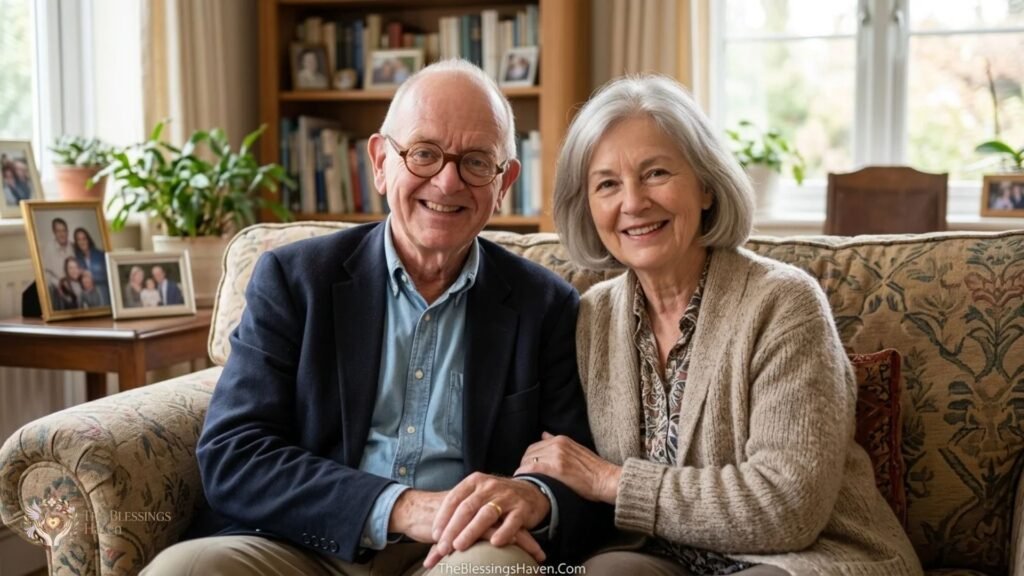
People often search for Henry Marsh wife to learn about his family. Marsh is married to Kate Fox, a social anthropologist and writer known for her work on English social behavior.
The connection between Henry Marsh Kate Fox brings together two people whose work involves observing and interpreting human experiences, although their professional fields are different.
Marsh also has three children from his first marriage. In a 2025 interview with Ukrainska Pravda, he discussed his family and reflected on the difficulty of balancing demanding medical work with family life.
He has spoken candidly about the way a career can dominate a person’s time and attention. His reflections suggest that professional commitment can bring meaning and achievement while also creating personal costs.
Although he shares many experiences in his memoirs, not every detail of his family’s private life is publicly documented.
His Experience With Prostate Cancer
In 2021, Marsh publicly discussed being diagnosed with advanced prostate cancer. His experience later became a central subject of And Finally.
The illness brought a major change in perspective for someone who had spent much of his working life treating seriously ill patients. As a surgeon, he had explained diagnoses and treatment choices to others. As a patient, he had to face the uncertainty, fear, and loss of control that can accompany a serious diagnosis.
His reflections do not offer a universal medical guide, but they provide insight into the emotional experience of illness and the importance of listening to patients.
In a 2025 interview, Marsh discussed living with cancer and how his experience had affected his relationship with death.
His story should not be reduced to the illness alone. It is one part of a much longer career that includes medical education, international collaboration, and writing about the human side of healthcare.
Helping Patients Through Hospice Ukraine
Marsh’s work with Hospice Ukraine reflects his continuing interest in medical care beyond surgery.
The charity was established in 2023 after Marsh and palliative-care doctor Rachel Clarke visited Ukraine during the war and saw the difficulties faced by local teams caring for seriously ill patients. The organization supports Ukrainian hospice and palliative-care services through practical resources, education, and training.
Palliative care aims to relieve suffering and improve quality of life for people living with serious illness. It can include pain management, emotional support, and help for families caring for loved ones.
This work connects with themes in Marsh’s books: medicine is not only about curing disease or performing operations. It also involves helping people when a cure is not possible and ensuring that patients receive compassionate care.
Awards and Professional Recognition
The Henry Marsh awards reflect his contributions to medicine, writing, and public understanding of neurosurgery.
His notable honors include:
- Commander of the Order of the British Empire (CBE): awarded in 2010.
- PEN Ackerley Prize: awarded for Do No Harm.
- South Bank Sky Arts Award for Literature: also awarded for Do No Harm.
- Royal Television Society Gold Medal: associated with the documentary Your Life in Their Hands.
- Emmy recognition: awarded to The English Surgeon.
- Honorary professorship in Ukraine: conferred by the Romodanov Institute of Neurosurgery in 2025.
These achievements reflect different parts of his career. His medical work helped build his professional reputation, while his books and documentary appearances brought his experiences to wider audiences.
Life After Retirement
The phrase Henry Marsh retired generally refers to his retirement from full-time NHS work in 2015. However, this did not mark the end of his professional activities.
He continued to write, lecture, and contribute to medical education abroad. His later work in Ukraine has included teaching and supporting healthcare professionals, even as the country’s medical system has faced the effects of war.
Marsh’s writing also continued to evolve. His earlier books focused largely on the responsibilities of being a surgeon, while And Finally reflects on the experience of receiving medical care.
Readers searching for the Henry Marsh latest book should check his publisher’s author page for the most current publication information. And Finally: Matters of Life and Death remains one of his best-known later works.
Why His Story Matters
Henry Marsh’s story matters because it challenges the idea that medical professionals can always control the outcome of treatment.
His memoirs show that doctors must combine technical knowledge with sound judgment, clear communication, and compassion. They must also acknowledge uncertainty and explain the possible consequences of treatment honestly.
His international work demonstrates the value of sharing medical knowledge and supporting local healthcare professionals. His involvement with Hospice Ukraine also highlights the importance of compassionate care for people living with serious illness.
Perhaps most importantly, his experience as a patient adds another dimension to his understanding of medicine. It reminds readers that behind every diagnosis is a person who may be frightened, uncertain, and in need of clear information and respectful care.
Frequently Asked Questions
Who is Henry Marsh?
Henry Marsh is a British neurosurgeon and author best known for his memoir Do No Harm and his reflections on brain surgery and medical ethics.
How old is Henry Marsh?
Henry Marsh was born on March 5, 1950, making him 76 years old in October 2026.
Where was Henry Marsh born?
Henry Marsh was born in Oxford, England.
Who is Henry Marsh wife?
Henry Marsh wife is Kate Fox, a social anthropologist and writer.
Does Henry Marsh have children?
Yes. Marsh has three children from his first marriage, according to a 2025 interview.
What is his most famous book?
His best-known book is Do No Harm: Stories of Life, Death and Brain Surgery, published in 2014.
When did he retire?
He retired from full-time NHS work in 2015 but continued writing and participating in medical education and work abroad.
What illness did he have?
Marsh publicly discussed his diagnosis of advanced prostate cancer in 2021. He reflects on the experience in And Finally.
What awards has he won?
His honors include the CBE, the PEN Ackerley Prize, and the South Bank Sky Arts Award for Literature. The documentary The English Surgeon won an Emmy.
Conclusion
Henry Marsh has built a remarkable career as a neurosurgeon, writer, and advocate for better medical understanding. Through Do No Harm, Admissions, and And Finally, he has shared the difficult realities of brain surgery and the personal consequences of illness.
His connection with Ukraine, documentary appearances, and involvement with Hospice Ukraine show that his contribution extends beyond his years in the operating room.
For anyone researching Henry Marsh biography, his life offers an important lesson: good medicine requires more than technical ability. It also requires honesty, humility, and a willingness to recognize the human experience behind every medical decision.

Welcome to The Blessings Haven! Rathna is a passionate content creator sharing heartfelt blessings, inspirational quotes, prayers, and meaningful wishes, along with helpful technology articles, digital trends, and online guides.

